
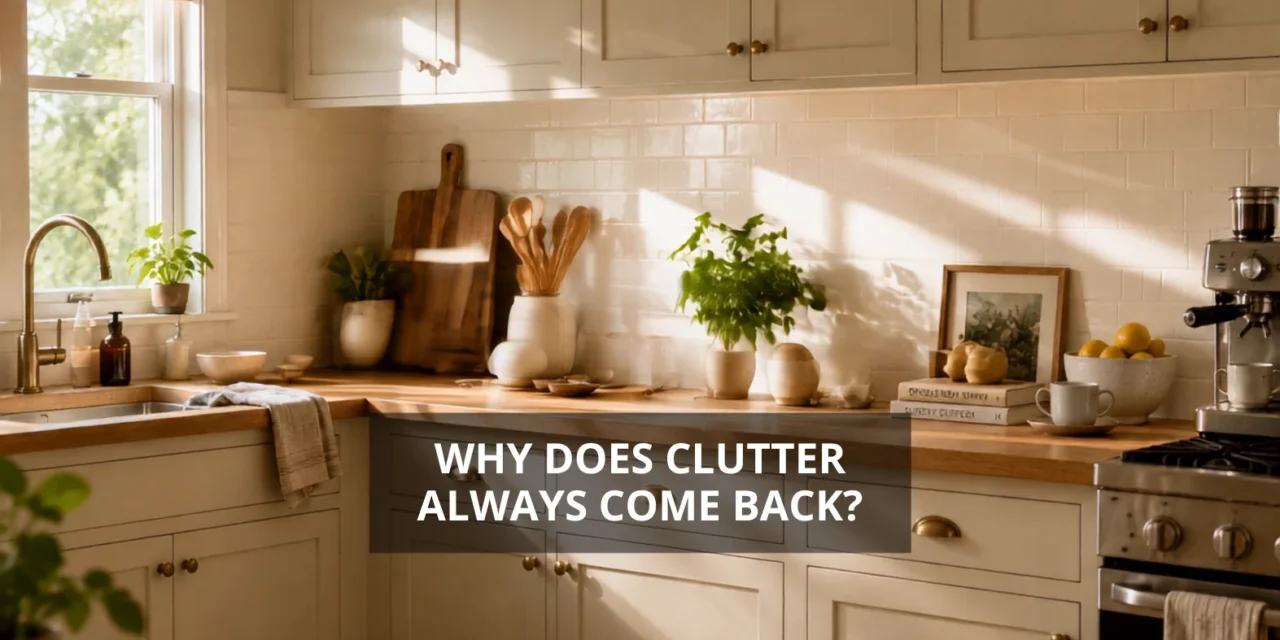
You spend a whole Saturday on it. Every drawer, every shelf, every pile gets sorted. By evening the house looks like something out of a magazine and you actually feel lighter walking through it. Then three weeks later you look around and somehow it’s all back. The counter has a pile again. The closet floor has clothes on it again. It’s like the clean-out never happened.
If this has happened to you, I want you to know it’s not because you did the declutter wrong. I’ve been through this cycle myself, and the truth is decluttering and staying organized are two completely different skills. One is a project. The other is a habit. Most of us are really good at the first one and never build the second.
Why the Clutter Always Comes Back
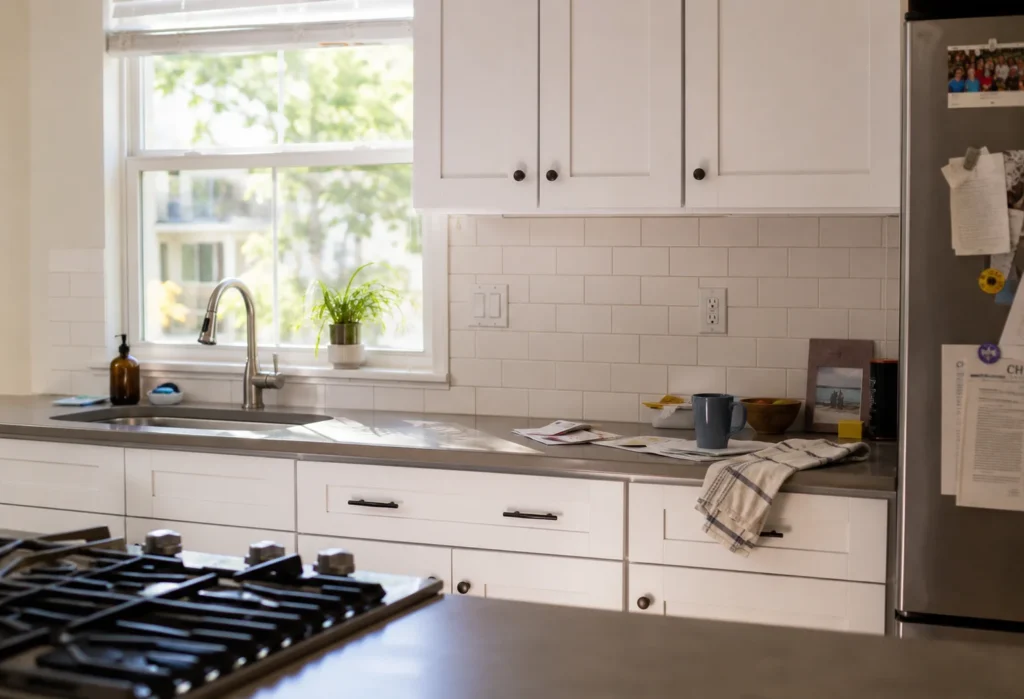
Here’s the honest reason, and it’s not laziness in the way people usually mean it. When you’re in the middle of your day, tired, busy, thinking about ten other things, you put something down and you tell yourself “I’ll deal with this properly later.” You’re not trying to make a mess. You genuinely mean to come back to it. But later rarely comes, because by the time you have a free moment, there’s already a small pile, and small piles are so much easier to ignore than one big mess. It keeps growing quietly until one day the room looks exactly like it did before you decluttered it. This isn’t just in your head either. Clinical psychologists have pointed out that cluttered spaces tax our brains because the objects compete for our attention, which is part of why a messy room makes it even harder to find the energy to tidy it.
The two spots this hits hardest in most homes are the kitchen and the closet, and there’s a simple reason for that. They’re the two places you touch every single day. A guest room you clean out once might stay clean for months because nobody’s in there disturbing it. But your kitchen counter and your closet get used constantly, which means they have the most chances every day to slip back into chaos.
The One Habit That Actually Prevents This
Before we get into room-specific fixes, I want to share the one rule that has genuinely kept my own space from sliding back. It sounds too simple to work, but it’s the difference between a house that stays organized and one that doesn’t.
Put it back the moment you’re done with it, not later.
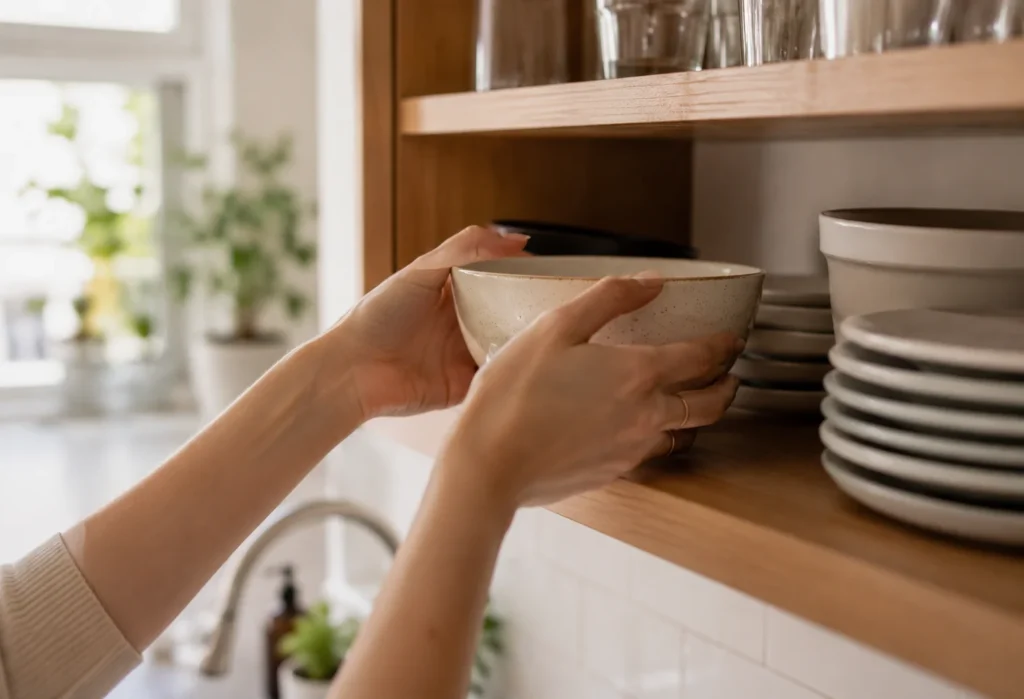
That’s it. When I take something from a shelf or a drawer, I put it back in that exact spot as soon as I’m finished using it, not at the end of the day, not when I “get a chance.” The honest part I’ll admit is that this only works when I’m the one doing it. Getting everyone else in the house to do the same thing is a completely different challenge, and if you live with family, kids, or roommates, you already know exactly what I mean. It also doesn’t feel automatic right away. Behavior researchers estimate that a new habit like this takes around 66 days on average before it starts feeling automatic instead of effortful, so give yourself real time before you judge whether it’s working.
Kitchen: Where Clutter Comes Back First
The kitchen re-clutters fastest because it’s the busiest room in the house. Mail lands on the counter, dishes pile up “for later,” snack wrappers sit out. Here’s what actually keeps it from sliding back.
1. Give the Counter One Job Only
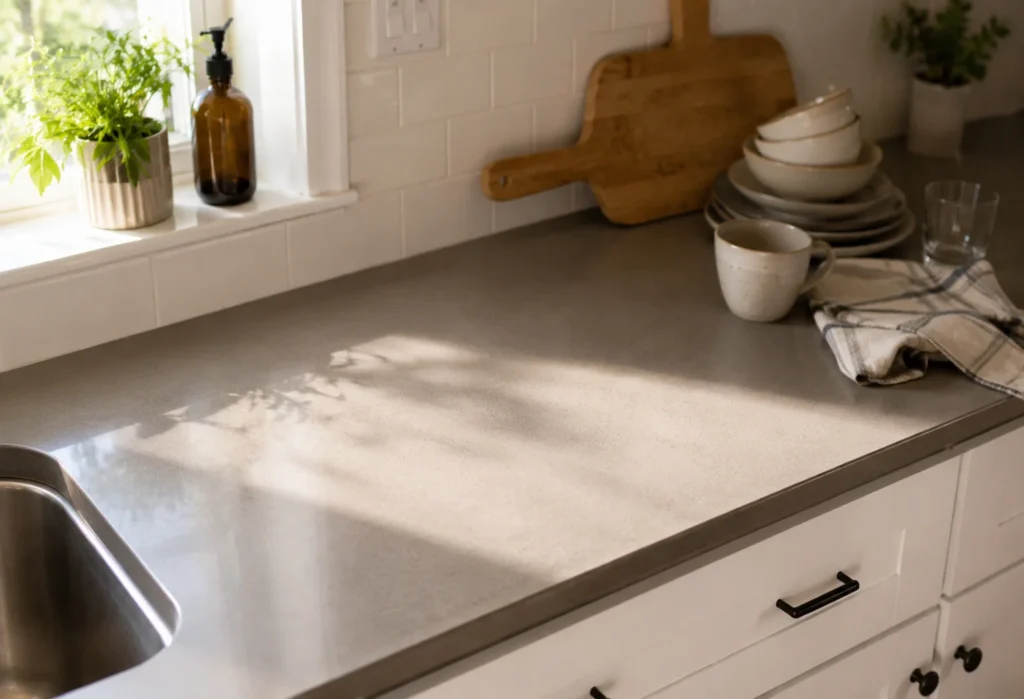
Pick one spot on your counter, even if it’s just the size of a placemat, and decide nothing lives there except what you’re actively using right now. Not mail. Not the thing you’ll put away later. If something sits there for more than a few hours it gets moved. This single rule stops the slow pile-up before it starts, because there’s no “acceptable spot” for things to collect.
2. Deal With Mail the Second It Enters
Mail is one of the sneakiest re-clutter sources because it feels harmless. A recycling bin or a small tray right by the door means mail gets sorted the moment it comes in, not stacked for “later” reading that never happens.

3. Wash As You Go, Not After
Dishes piling in the sink is one of those things that snowballs fast, because a full sink makes people stop wanting to use the kitchen properly, so more things get left out instead of put away. Rinsing or washing right after use, even just the one pan, keeps the whole space from tipping over.

4. Do a 60-Second Reset Before Bed
Every night, before anything else, spend one minute putting the kitchen back to its baseline. Wipe the counter, put stray items back, empty anything left in the sink. It takes almost no time when it’s done daily, but skip it for even three nights and you’re right back to a weekend-sized cleanup.

Closet: The Second Spot That Slides Back
Your closet re-clutters for a different reason than the kitchen. It’s not about small items piling up, it’s about clothes not having a clear “home” so they end up on the floor, the chair, or shoved back in wrong.
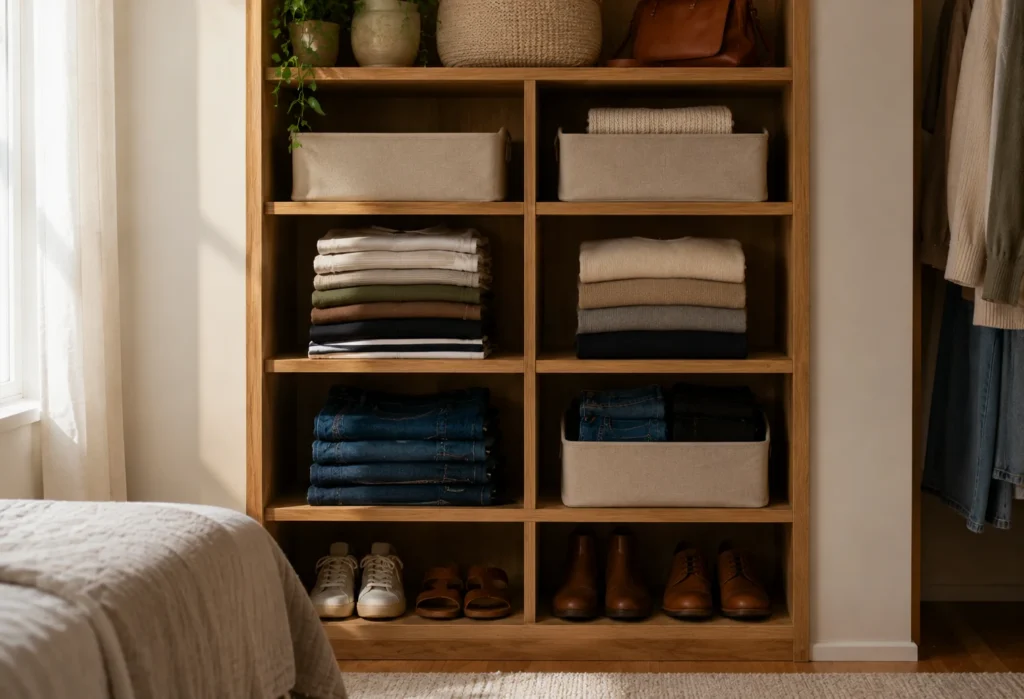
5. Every Item Needs One Specific Spot
Vague zones like “shirts go somewhere on this shelf” don’t hold up. When every item has one exact spot, folded shirts here, jeans there, putting things away takes seconds because there’s no decision to make. The moment you have to think about where something goes, it ends up on the floor instead.
6. Handle the “Maybe Dirty” Pile Immediately
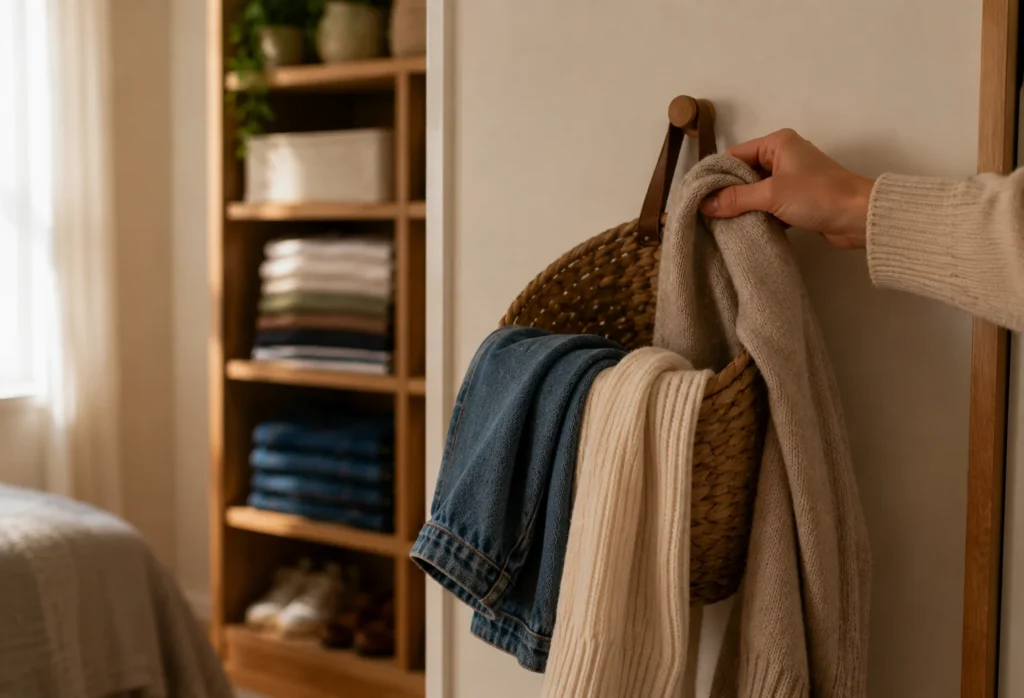
That chair or floor spot where clothes worn once but not quite dirty end up is one of the biggest closet re-clutter zones. A small hook or basket just for “wear again before washing” items gives them a real home instead of a random surface.
7. Do a 5-Minute Sunday Reset
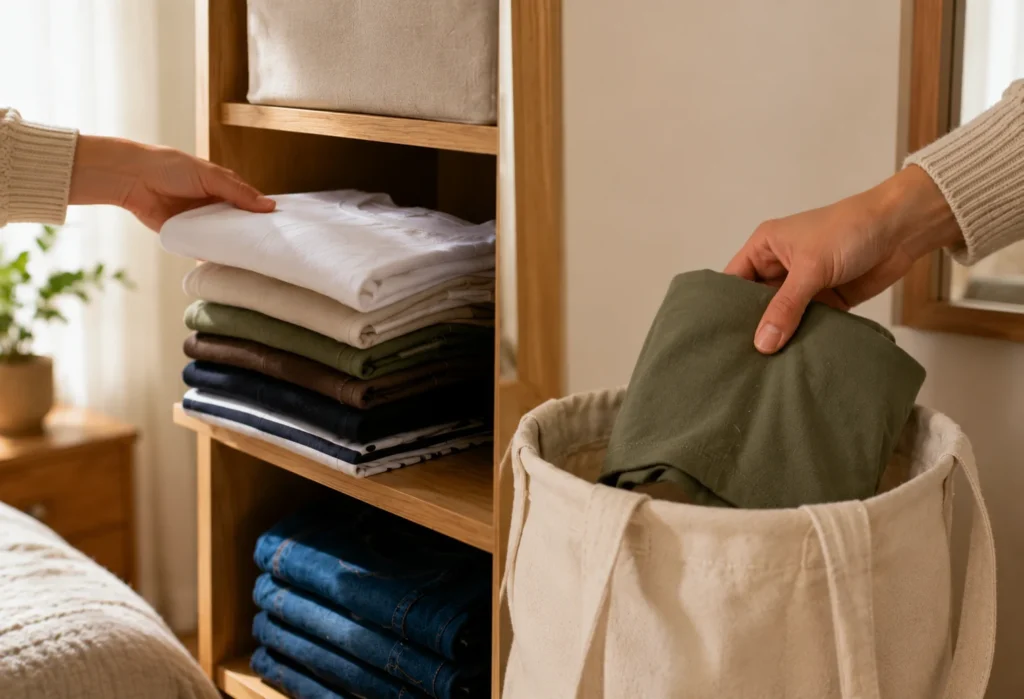
Once a week, put back anything that’s drifted, refold what’s gotten messy, and check if anything needs to go in the donate pile before it becomes clutter again. This is much smaller than the original big clean-out because you’re only catching a week’s worth of drift, not months of it.

8. One In, One Out for New Clothes
When something new comes into the closet, something old leaves it — that is the one-in-one-out rule. This is the single biggest reason closets slide back to overflowing after a big declutter, because the sorting happened once but new things kept coming in without anything going out.
Getting Everyone Else On Board
If you live with other people, you already know the hardest part isn’t your own habits, it’s everyone else’s. A few things that actually help without turning it into a fight:
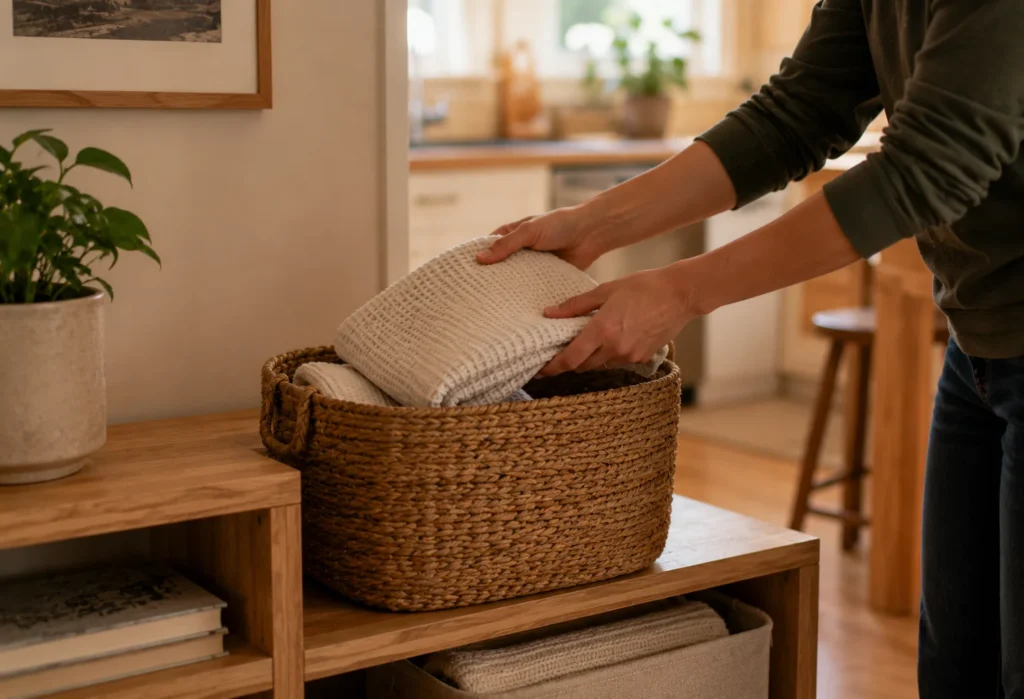
Make putting things away genuinely easier than not doing it. If the “away” spot is a struggle to reach or a hassle to open, people will default to leaving things out, not because they don’t care, but because friction wins every time. Lower shelves, open baskets instead of tricky lids, and clear labels remove the excuse.
Don’t aim for everyone adopting your exact system. Aim for one or two shared rules the whole household agrees to, like the counter zone or the mail tray, rather than trying to get buy-in on everything at once.
FAQ
How long does it take for a decluttered space to feel “safe” from sliding back?
Most people notice the risk drops significantly after about a month of consistent small resets, since that’s roughly how long it takes for putting things back immediately to start feeling automatic instead of effortful.
What if I don’t have time for a daily reset?
Even 60 seconds counts. The goal isn’t a deep clean, it’s just stopping small piles from becoming big ones. A minute a day is far less time than the hours a full re-declutter eventually costs.
Should I declutter again if it starts slipping?
A small weekly reset should catch drift before it needs a full redo. If you find yourself needing a big clean-out again within a few months, it usually means the “home for everything” step was skipped somewhere, not that you need to declutter harder.
Is it normal for one room to clutter faster than others?
Completely normal. High-traffic rooms like the kitchen and closet will always need more frequent small resets than a room you barely use, since they get disturbed every single day.
Related Articles



Trackbacks/Pingbacks