
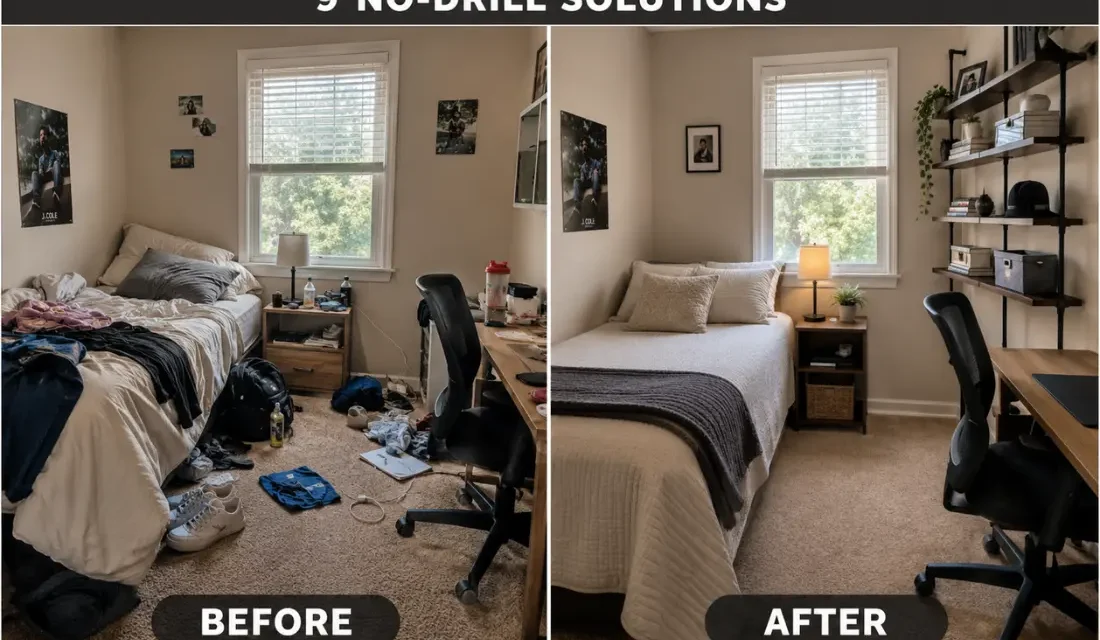
My bedroom fits a bed, a dresser, and not much else. Ten feet by eleven feet, and for the longest time I figured that was just the deal: small room, small amount of storage, end of story.
Then I noticed something while comparing my room to organized rooms online. The ones that actually looked spacious were not bigger. They just used the walls. My dresser alone had almost eight feet of bare wall above it doing nothing.
The problem is I rent, and my lease is specific about holes in the wall coming out of my deposit. So everything below had to go up without a drill, a screw, or a nail. It took a few wrong turns to get there, including one product that peeled paint off when I removed it, more on that below, but these nine held up for months without leaving a mark.
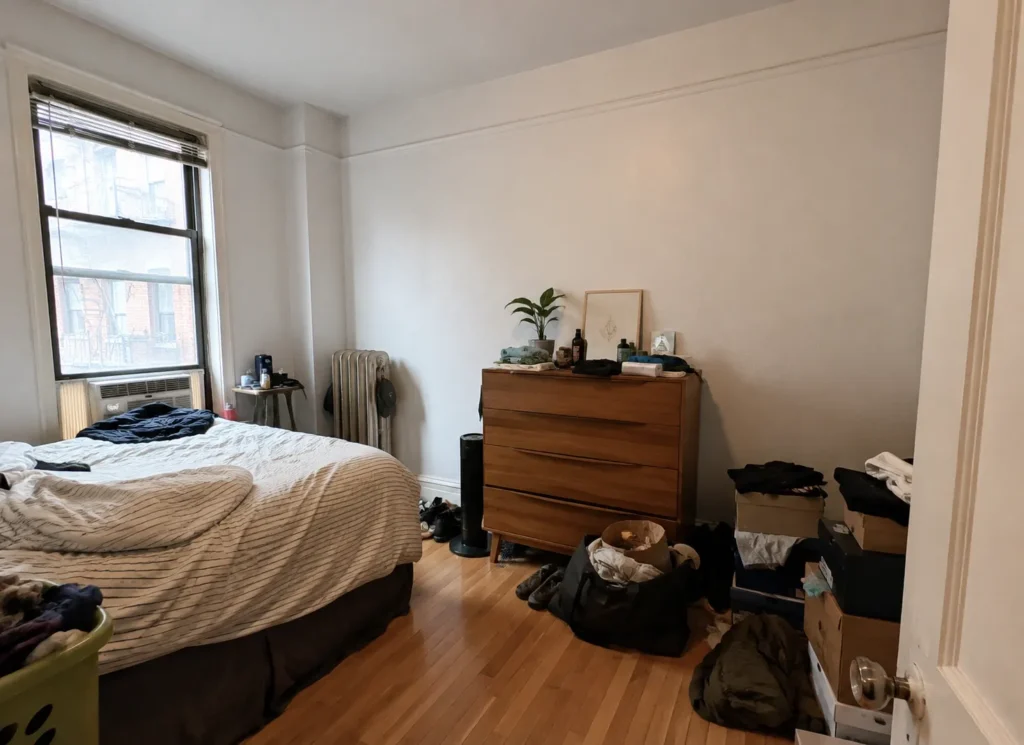
What You Need Before You Start
Almost every idea below uses the same small toolkit: a stud finder app on my phone (the magnet-based ones are free and surprisingly accurate), a small level, and a variety pack of Command strips and hooks in different weight ratings. Knowing the actual weight rating of what you are hanging matters more than I expected. I learned that the hard way with the pegboard in idea six.
1. Command Strip Floating Shelves
These were the first thing I tried and they are still the ones I use the most. The trick is the curing time. The instructions say to wait an hour before loading any weight onto the strips, and I ignored that the first time. The shelf slid down within a day.
The second attempt, I waited the full hour, and three small shelves have held steady above my dresser for months now. They hold books, a small plant, and the jewelry tray that used to live in a pile on my dresser top. A 3-pack of strips ran about $12 at Target, and the shelves themselves were another $20 online.
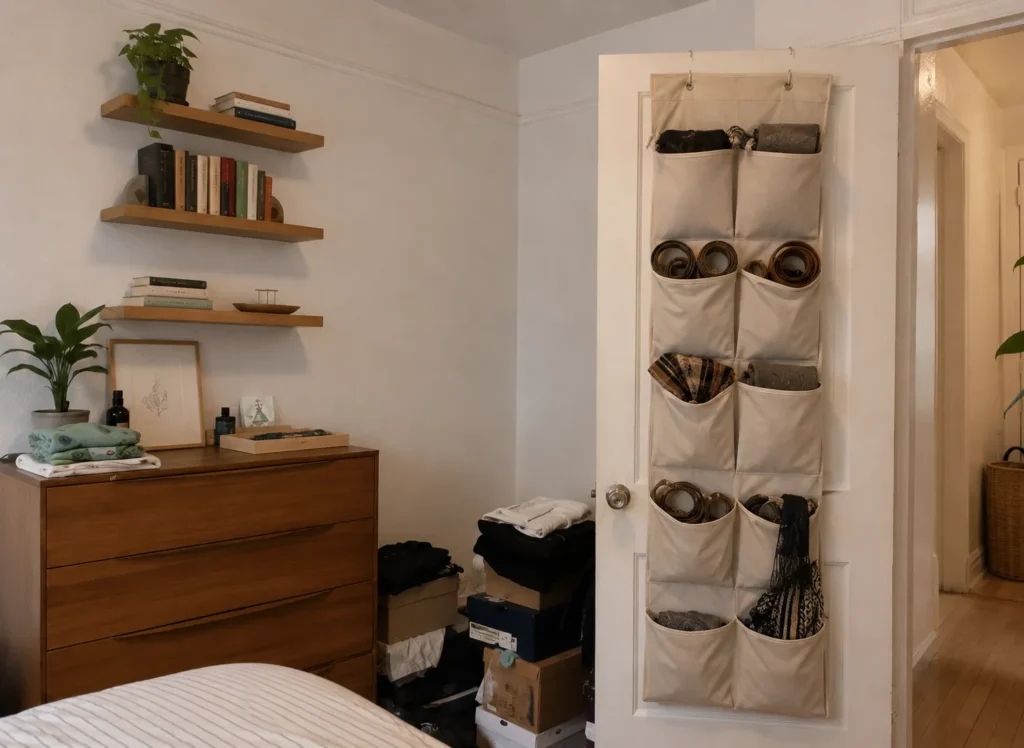
2. Over-the-Door Organizer
The back of my bedroom door was dead space for two years before I did anything with it. A canvas over-door organizer with pockets just hangs over the top of the door frame, no tools needed, and it never touches the door itself so there is zero risk to the paint or the hinges.
Mine has six pockets and holds scarves, belts, and the flat stuff that used to get tossed on top of my dresser. The one thing to check first is door clearance. If your door swings into a tight space, measure the pocket depth before buying so it does not catch on the frame when the door closes.
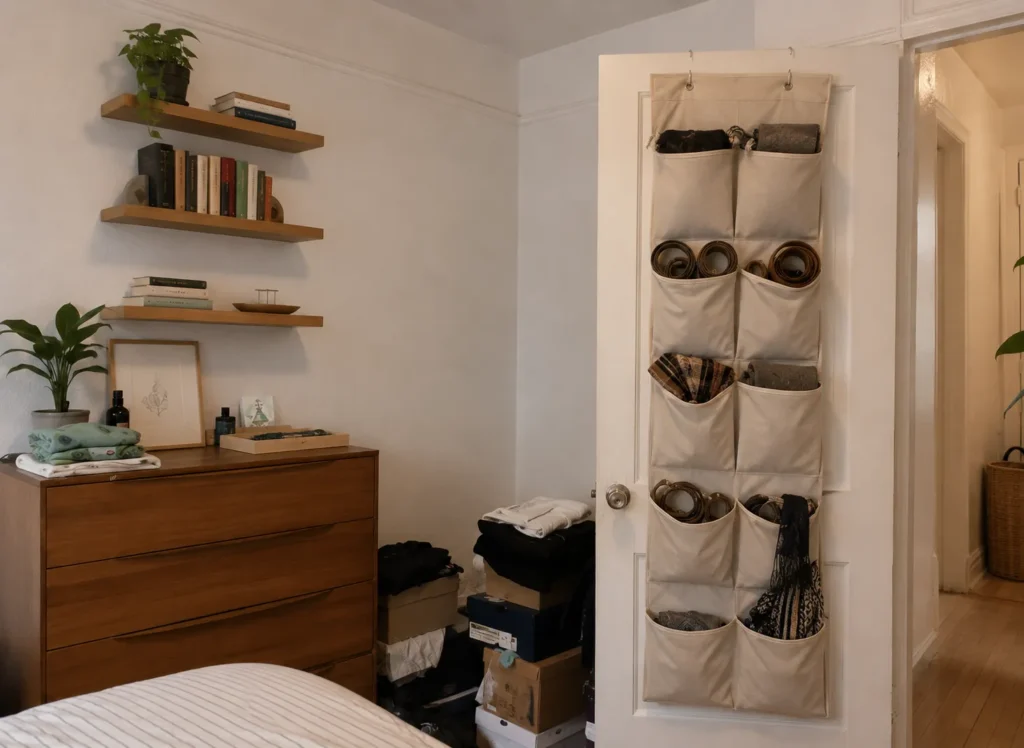
3. Tension Rod Shelf in the Closet
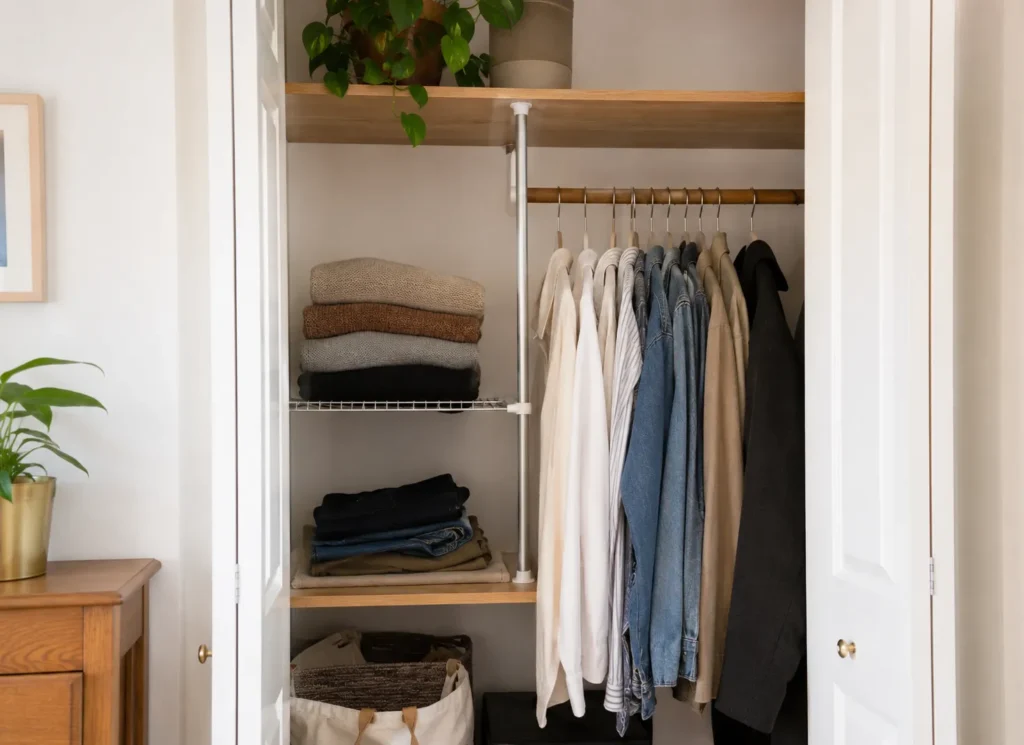
My closet had one shelf, which meant one layer of sweaters stacked on top of each other until I needed the one buried at the bottom. I wedged a tension rod vertically between that shelf and the shelf above it, then set a small wire shelf insert on top of the rod. It created a second shelf level without a single screw.
It took two tries to get the rod tight enough that it would not slip once I added weight. If yours slides, look for a rod rated slightly longer than the gap, not exactly the gap width.
4. Command Hooks in a Vertical Line
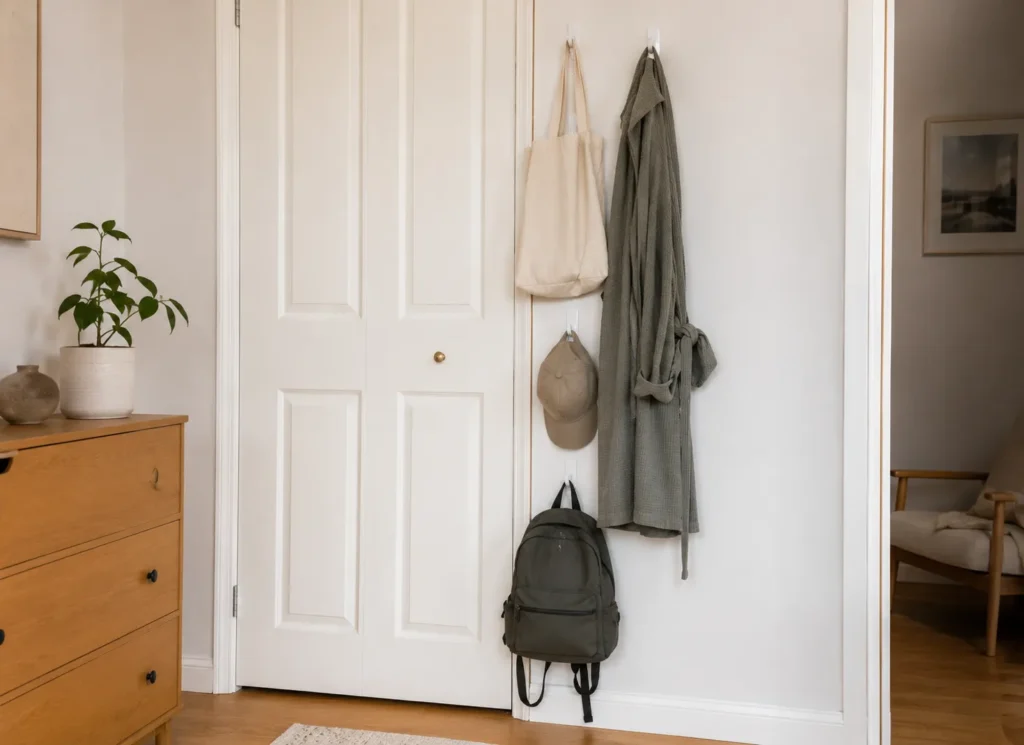
I used to scatter hooks wherever there was a free patch of wall, and it looked messy even though it was technically organized. Lining up six small hooks in a single vertical column next to the closet door fixed that. Bags, a robe, a hat, and my work backpack all hang in one column now instead of being thrown over a chair.
Check the weight rating printed on the hook packaging before committing. The small ones hold about a pound, the medium ones closer to three, and a heavy winter coat needs the largest size in the pack.
5. Stackable Storage Cubes
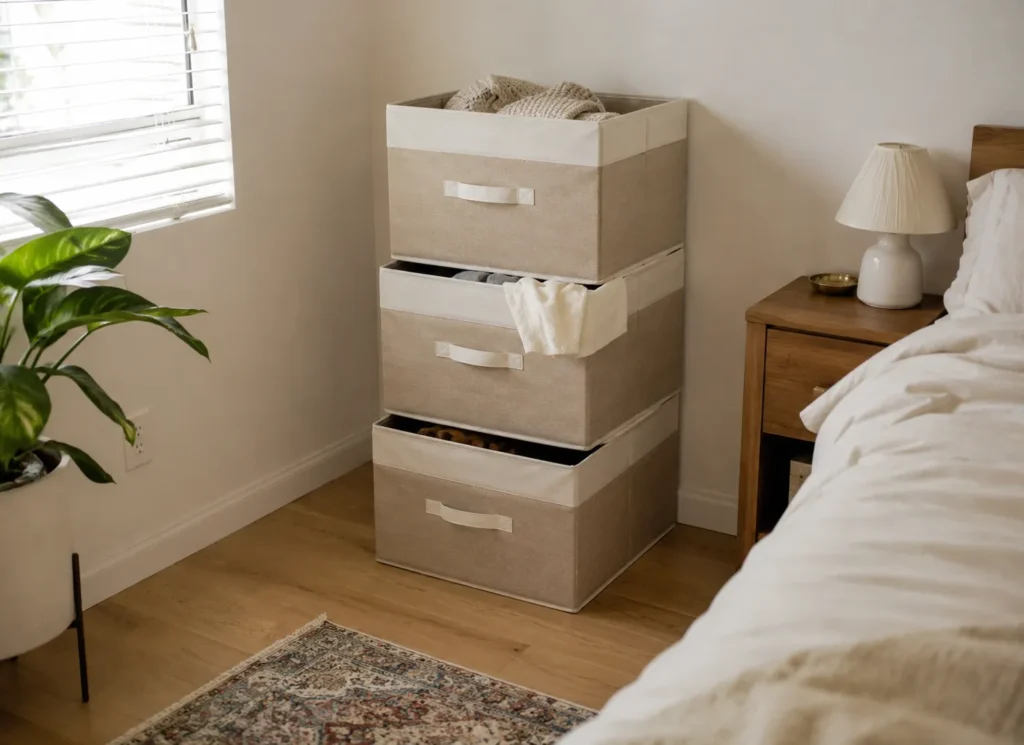
This was the one purchase that changed how the whole room felt, not just one corner of it. Three fabric cube organizers stacked on top of each other hold the same amount as spreading bins across the floor, but the footprint shrinks to a single two-foot square.
I slid a thin scrap shelf board between the second and third cube so the top one would not crush whatever was packed in the one below it. That was a $30 fix from IKEA for the cubes, plus a scrap board I already had lying around.
6. Wall-Mounted Pegboard With Adhesive Backing
This is the one that taught me a lesson. I tried a cheap roll of double-sided mounting tape first to hang a small pegboard panel above my desk corner. It held for about two weeks, then came down overnight along with a thin layer of paint. Lesson learned, cheap tape is not rated for anything beyond featherweight decor.
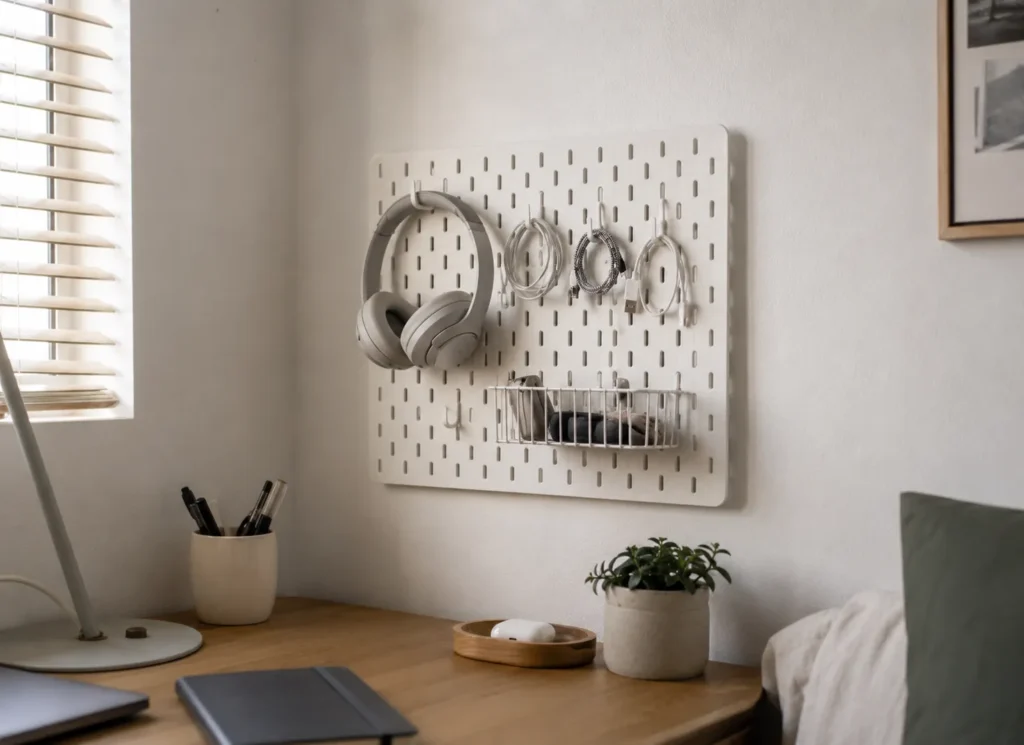
The fix was an adhesive-backed pegboard panel actually rated for real weight, around $20 online, with its own mounting strips built for walls. That one has held my chargers, headphones, and a small mail basket for months with zero movement, and no damage when I tested peeling one corner to check.
7. Bed Risers With Vertical Under-Bed Bins
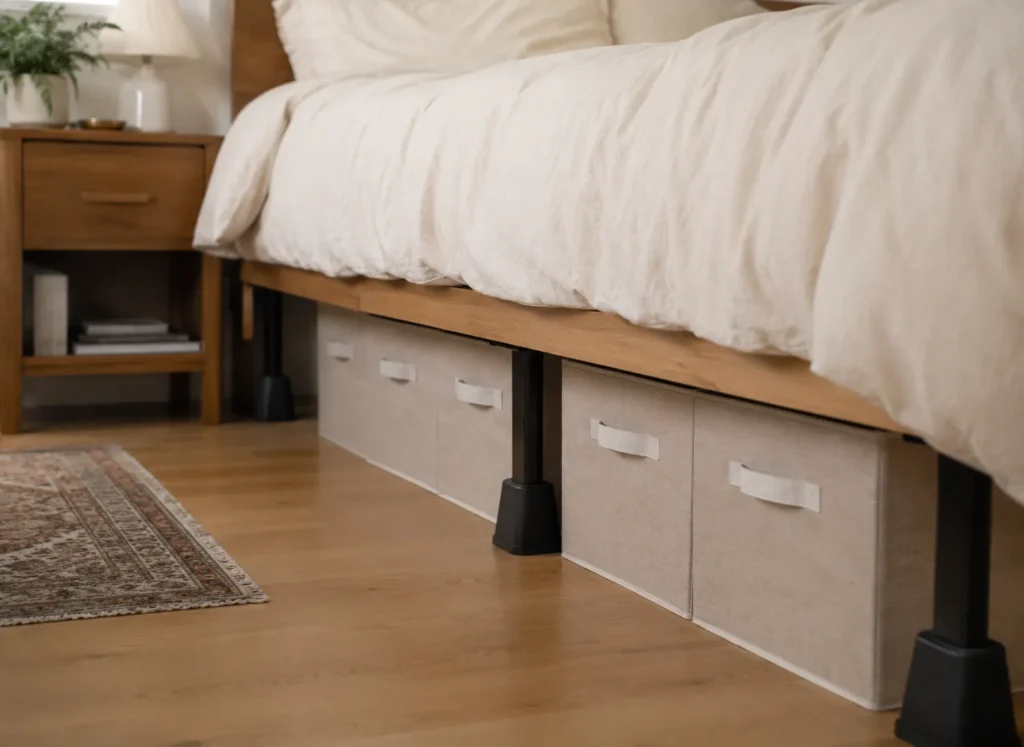
This one is technically under the bed, but it only works because of the vertical part. Bed risers lifted my mattress frame about four extra inches, just enough to fit tall, narrow bins standing upright instead of lying flat. A standing bin packs more into the same square foot of floor than a flat one ever could, since it is using height instead of just footprint.
I store off-season clothes this way now, which freed up an entire dresser drawer for everyday things. Risers run about $15 for a set of four, and the bins were another $25.
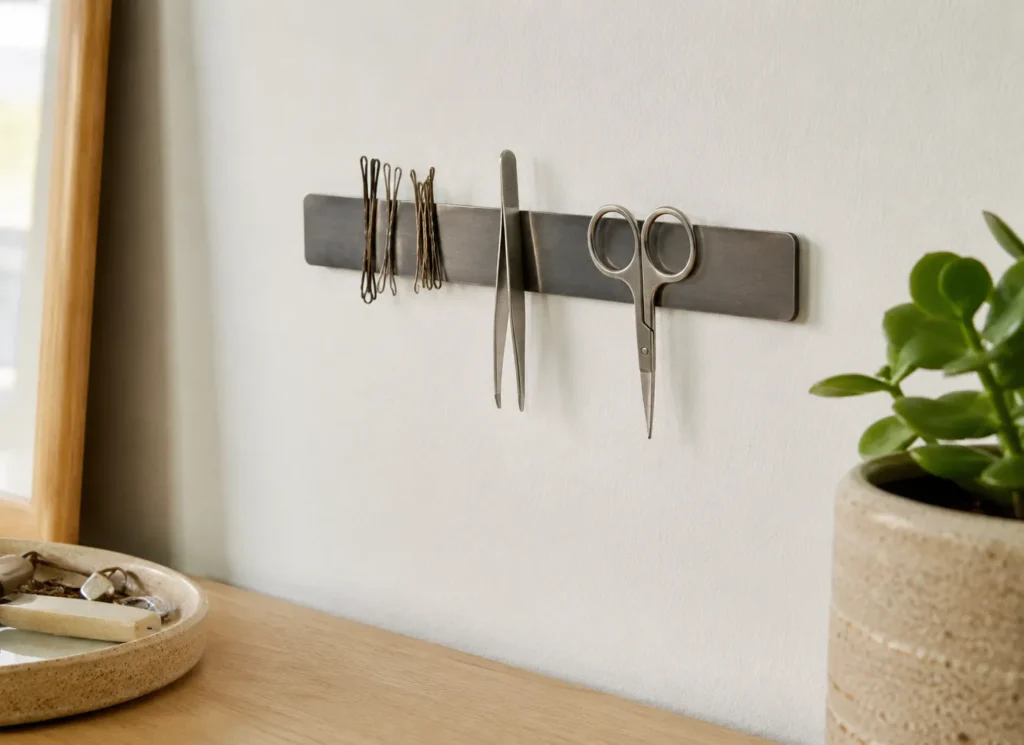
8. Magnetic Strip for Small Metal Items
A magnetic knife strip, the kind made for kitchens, works just as well mounted on a bedroom wall with adhesive backing. Mine holds bobby pins, tweezers, small scissors, and the jewelry-making supplies that used to roll loose around a drawer.
The catch is it only works on actual metal. I tried it with a few gold-tone jewelry pieces before realizing they were not magnetic at all and just fell right off.
9. Hanging Closet Organizer With Shelves
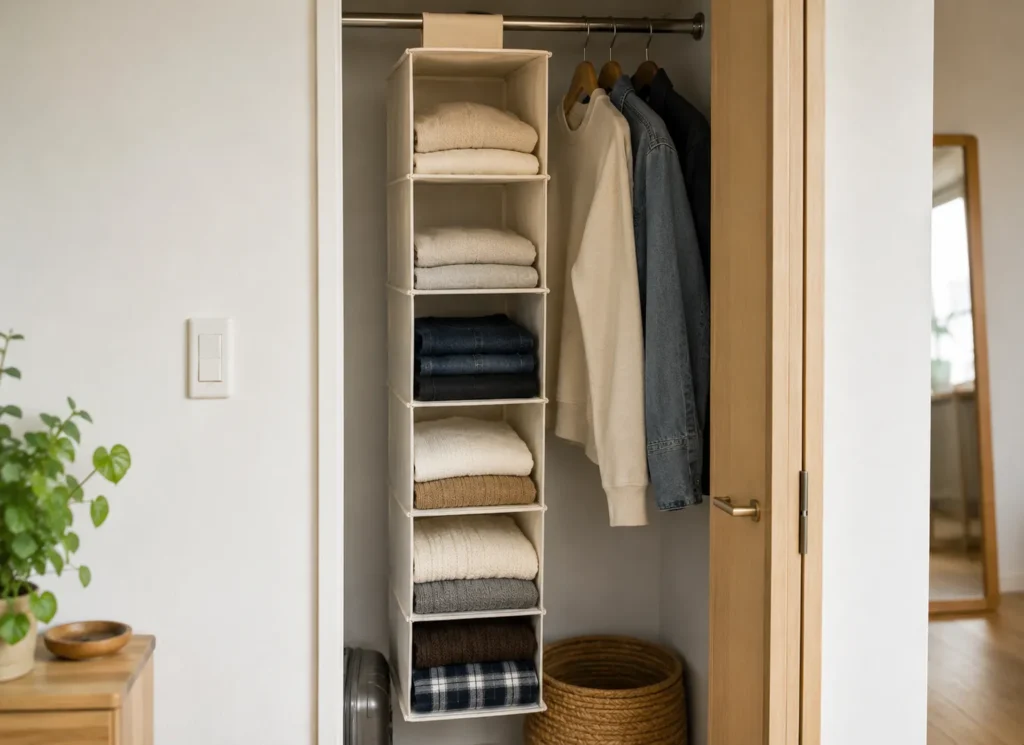
Instead of squeezing in a second dresser I did not have floor space for, I hung a fabric shelf organizer from the closet rod. It gives me six extra shelves of folded storage using rod space that used to sit empty above my hanging clothes.
The one thing I would do differently is buy the version with a reinforced top hook. My first one had a thin wire hook that bent slightly under the weight of six full shelves within the first month.
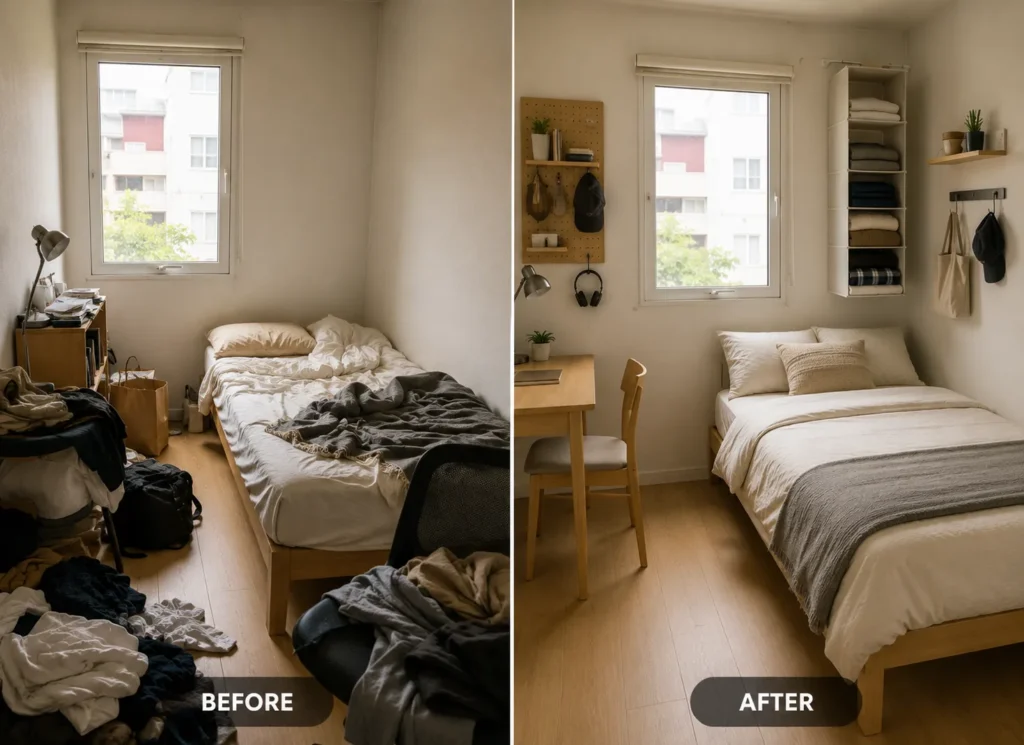
All nine of these together cost me somewhere around $180, spread out over a couple of paychecks instead of bought all at once. None of it required a single hole in the wall, and I have gotten my full deposit back twice now in apartments where I used these same tricks. The floor space difference is the part that actually surprised me. The room is not bigger. It just stopped looking like storage was the problem. For a full plan on creating storage with no built-ins, start here.
Frequently Asked Questions
Will Command strips really hold heavy items? Yes, as long as the weight rating on the package matches what you are hanging, and you let them cure for the full hour before loading anything. The small shelf strips typically hold 5 to 7.5 pounds per strip, so spread heavier items across more strips rather than relying on just one or two.
Do these ideas work in rooms with low ceilings too? Yes. None of these depend on reaching toward the ceiling. They use wall space at eye level and below, plus existing furniture height, so a low ceiling does not limit any of them.
Will adhesive products damage the paint when I remove them? Properly rated Command-brand products are designed to release cleanly when you pull the tab straight down slowly. The one product that did damage my paint, mentioned in idea six, was a cheap generic mounting tape, not a Command product, which is exactly why I do not use anything else now.
What if my walls are textured or stucco? Adhesive strips do not grip textured or stucco walls reliably. The tension rod, the over-door organizer, the bed risers, and the hanging closet organizer are better choices in that case since none of them depend on wall adhesion at all.
How do I find a stud without drilling test holes? A magnet-based stud finder app works without any holes since it detects the screws already in the wall. It will not work for every wall type, but it is a free first step before buying a dedicated stud finder tool.
Can I use these in a kids room too? Yes, especially the stackable cubes and the hanging closet organizer, since both keep storage low enough for kids to reach on their own while still using vertical space efficiently.
How much weight can a pegboard panel actually hold? It depends entirely on the backing, not the pegboard itself. A panel with proper adhesive strips rated for several pounds can hold light tools and accessories, but check the specific weight rating before hanging anything heavier than headphones and small baskets.





Trackbacks/Pingbacks