
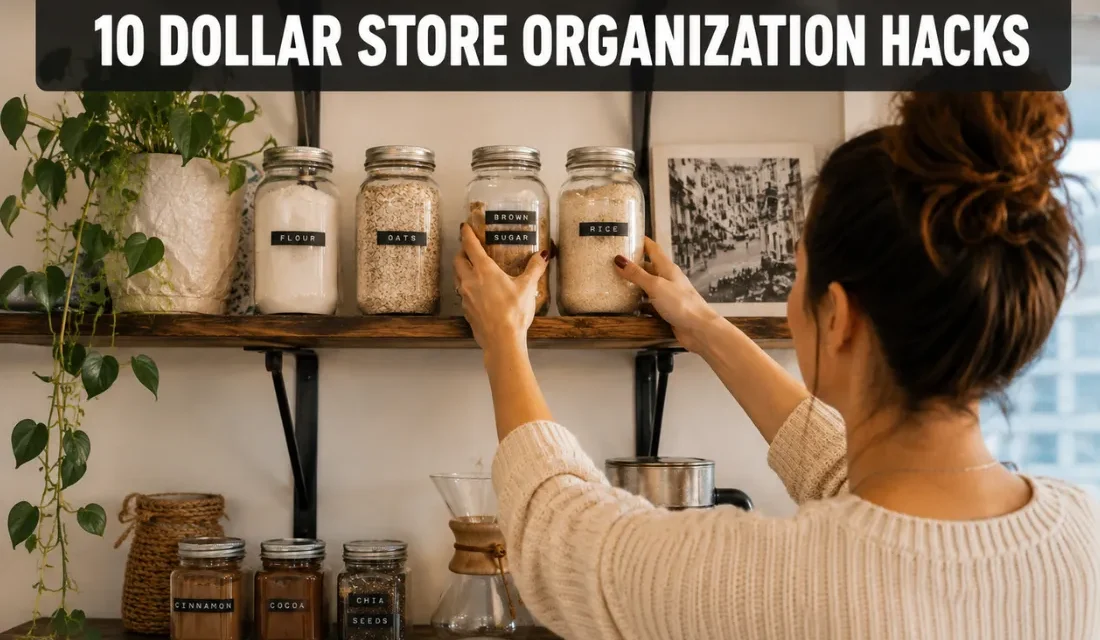
I’ll be honest with you. I used to scroll past all those perfectly styled dollar store organization posts on Pinterest and think, that’s not my kitchen. Mine has kids running through it, a pantry that somehow gets messy two days after I organize it, and way too many half-used spice jars shoved in the back of a cabinet.
But over time, I started experimenting. Not with the aesthetic stuff, but with the practical stuff. Cheap plastic bins. A set of little jars I found at a local discount store. Baskets that cost next to nothing. And slowly, genuinely, things got better.
So this is not a post about making your kitchen look like a magazine shoot. This is about what actually works when you have a small space, a busy household, and a real budget.
The biggest thing I learned is that dollar store items work best when you stop trying to make them look expensive and just use them for what they are: cheap, functional containers that help you see what you have and find it quickly. That’s the whole point of organization anyway.
Here are the hacks that genuinely made a difference in my home.
1. Label a Set of Small Jars and Watch Your Pantry Transform
This one sounds so simple that it almost feels like it doesn’t count. But it made one of the biggest differences in my kitchen.
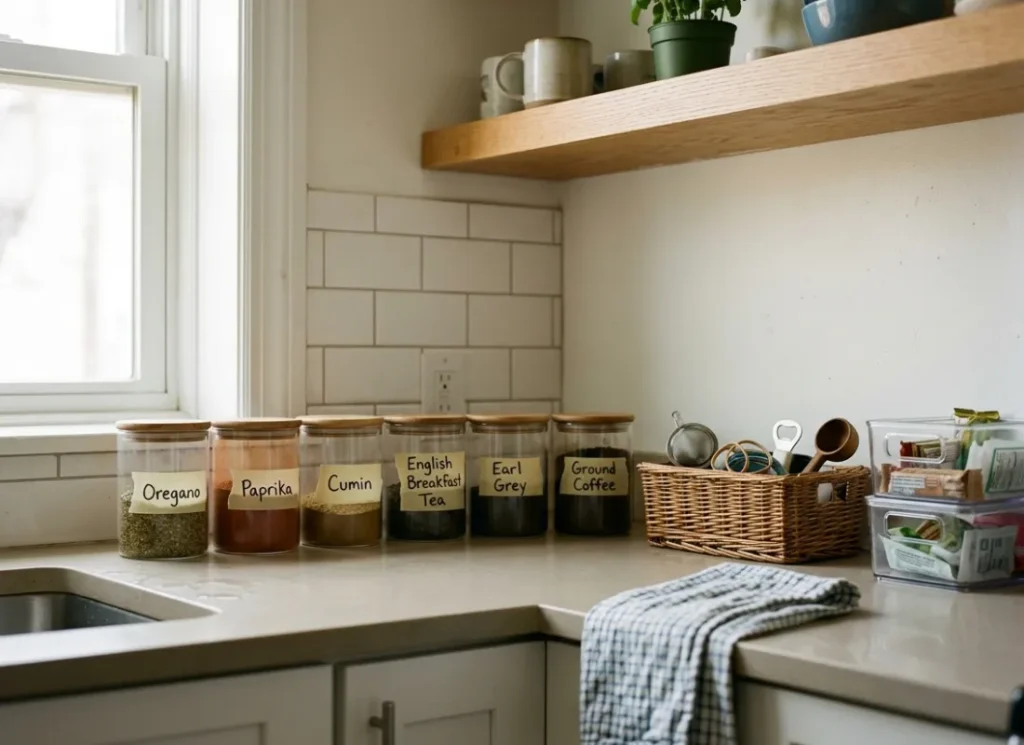
I picked up a set of small matching jars from a discount store, the kind that come bundled together. I split them into two groups. One set went for spices. The other went for tea, coffee, and that random pack of hot chocolate that always gets lost behind everything else. I wrote labels on each one with a marker and lined them up on a narrow shelf.
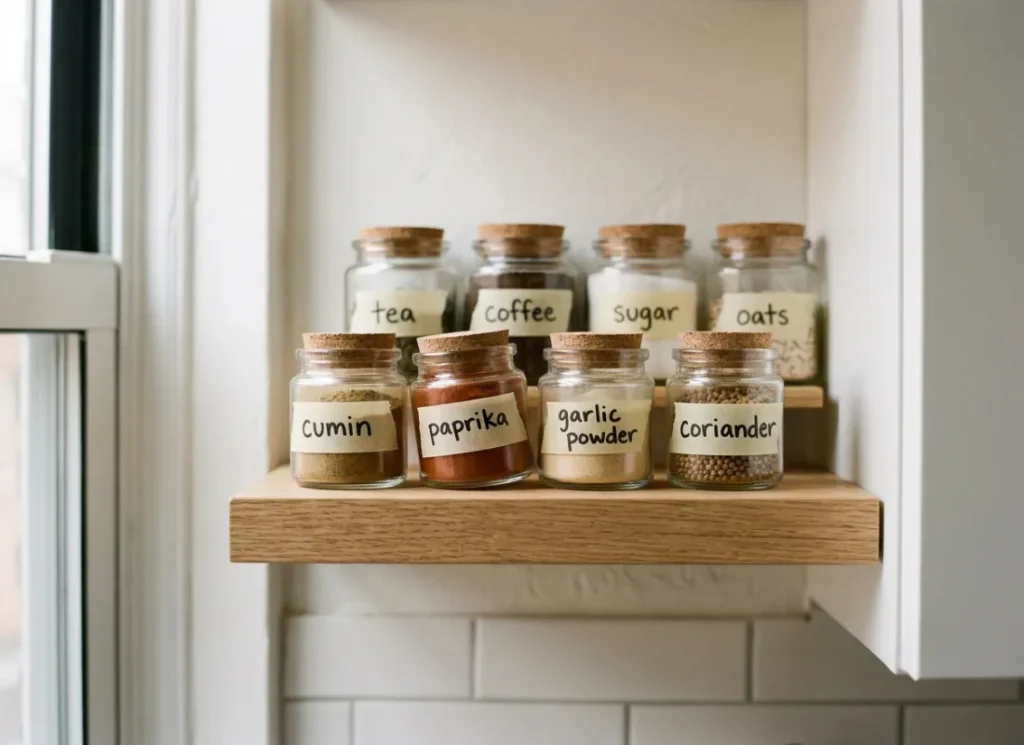
The difference was immediate. I stopped buying duplicate spices because I could actually see what I had. My countertop cleared up. And my kids stopped knocking things over because nothing was stacked precariously anymore.
If you want to take it up a notch, chalkboard labels [external link: Amazon chalkboard labels] work beautifully on these jars and let you reuse them when you change what’s inside.
2. Use Small Plastic Bins as Drawer Dividers
Kitchen drawers are a black hole. Spatulas, spoons, random batteries, expired coupons, a birthday candle from three years ago. You know the one.
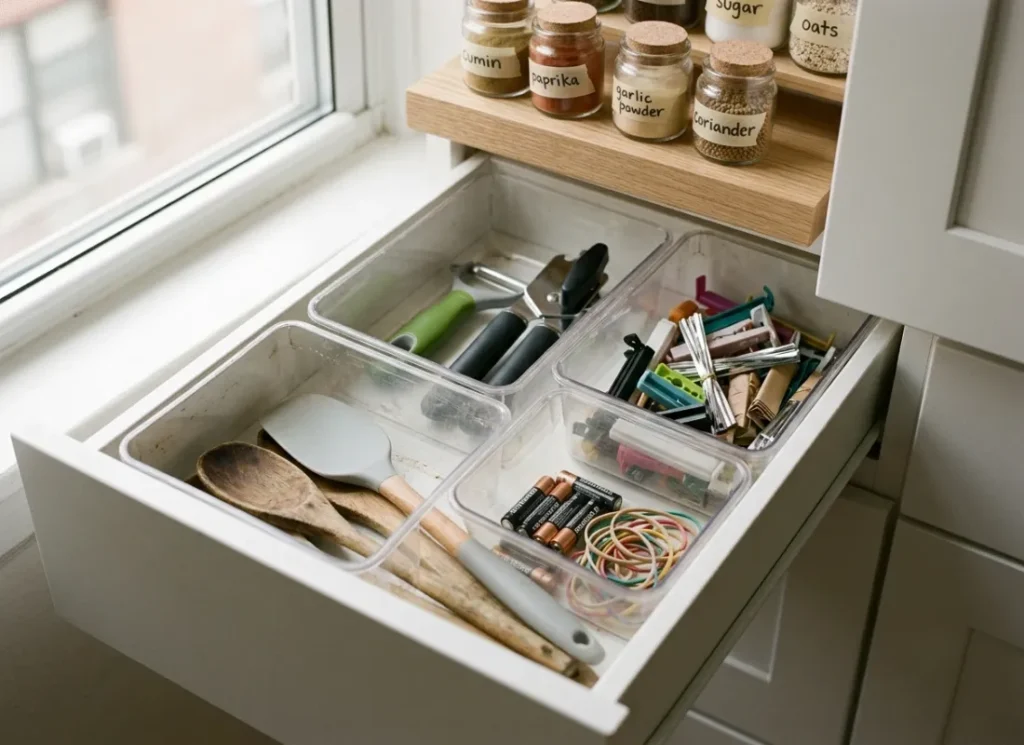
Small plastic bins from the dollar store, the rectangular ones that usually come in a multi-pack, fit inside a standard kitchen drawer almost perfectly. You do not need a fancy bamboo drawer organizer. You need four small bins and five minutes.
Put utensils in one, small tools in another, batteries and random things in a third. The fourth one can be a “I’ll deal with this later” bin. That’s fine. That’s real life.
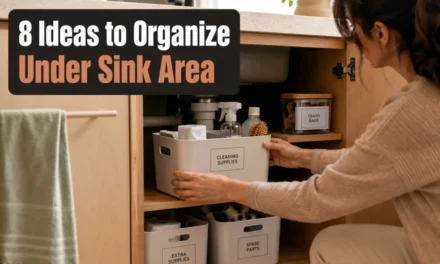
3. Put a Tension Rod Under the Sink
Under the sink is almost always wasted vertical space. You have products sitting flat on the cabinet floor when you could be hanging half of them.
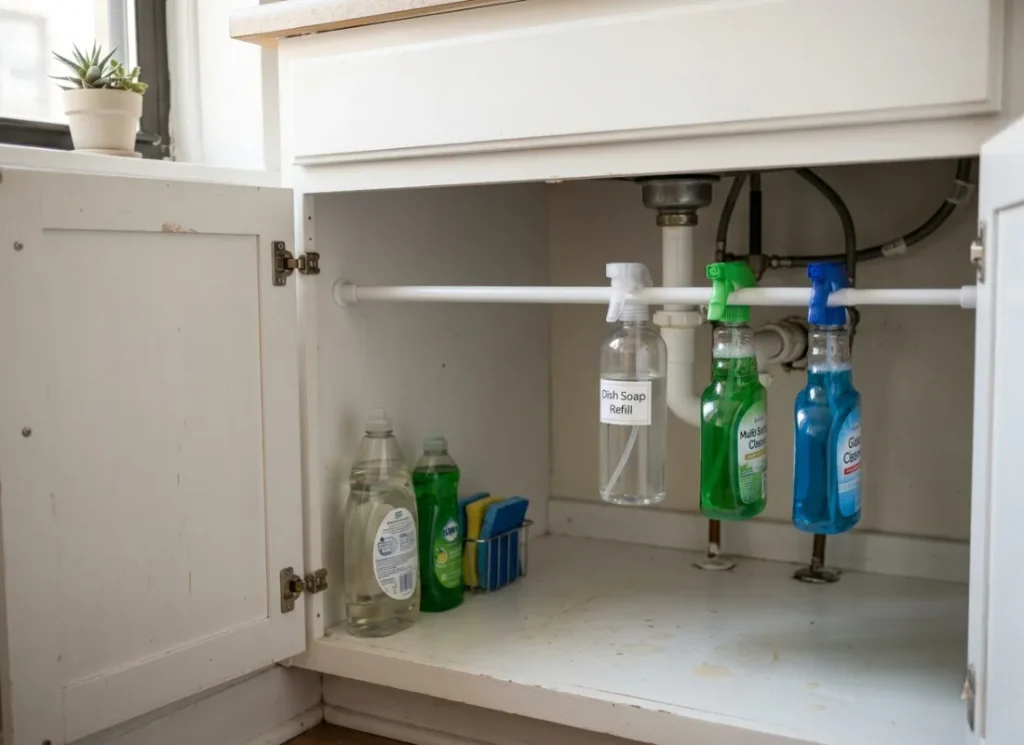
A tension rod, which you can find at any dollar or discount store for very little, fits across the inside of the cabinet. Hang spray bottles by their trigger handles. Just like that, the floor of the cabinet opens up and you can actually see everything. Cleaning supplies in one section, dish soap extras in another.
This is especially useful in small kitchens where under-sink storage is doing a lot of heavy lifting.
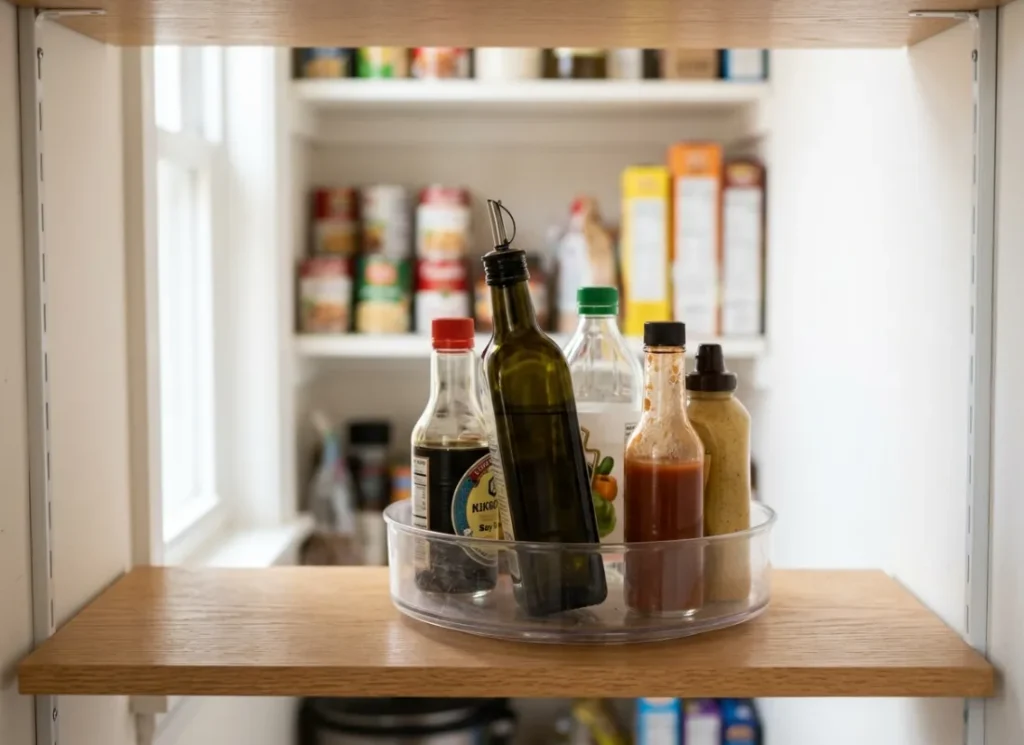
4. Use a Lazy Susan for the Pantry Corner Problem
Every pantry has a dead zone. That back corner where things go and never come back. A lazy susan, even a cheap plastic one from the dollar store, completely fixes this.
Stick it in that corner and put your oils, vinegar, soy sauce, and condiments on it. One spin and everything comes to you. No more pulling out six bottles to find the one you need at the back.
This is one of those solutions that feels almost too simple, and that’s exactly why it works.
5. Repurpose a Shoe Rack as Pantry Shelving
A small plastic or metal shoe rack, the kind with two or three tiers, makes an incredible pantry shelf riser. Place it on your pantry floor or on a wide shelf and suddenly you have layered storage for canned goods, packets, and snack bags.
The reason this works so well is that pantry floors are almost always underused. We stack things flat and then forget what’s at the bottom. A shoe rack lifts everything up and puts it in view.
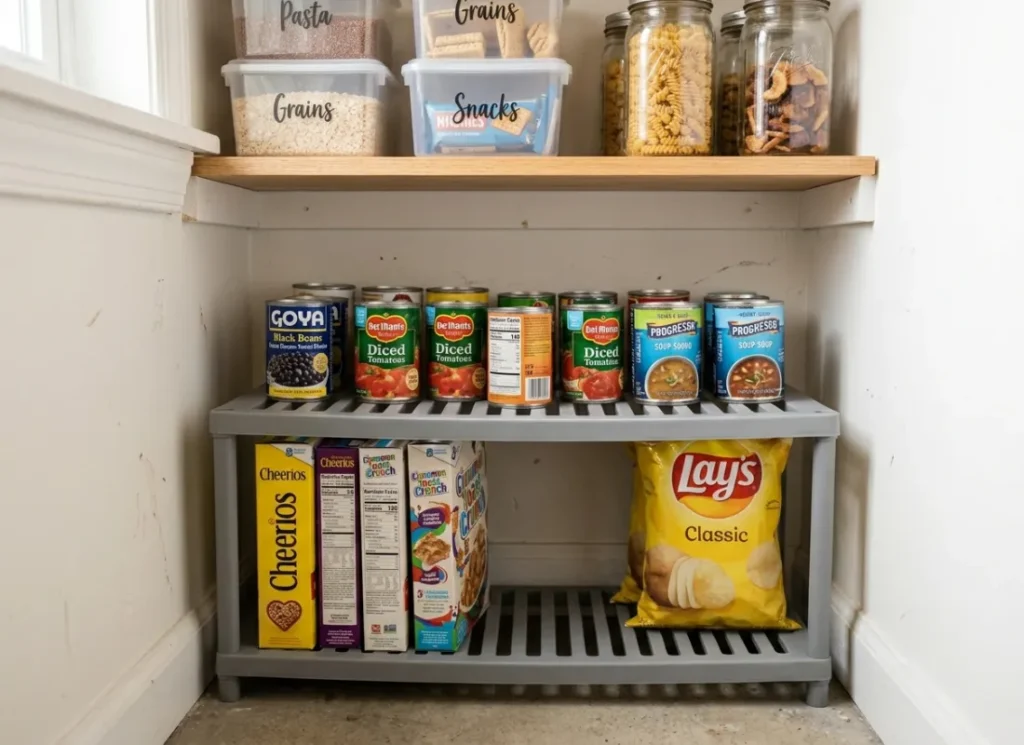
If you have kids, this is also a great way to create a dedicated “kid snack zone” at a lower level so they can grab what they’re allowed to without turning the whole pantry into a disaster. I speak from experience.
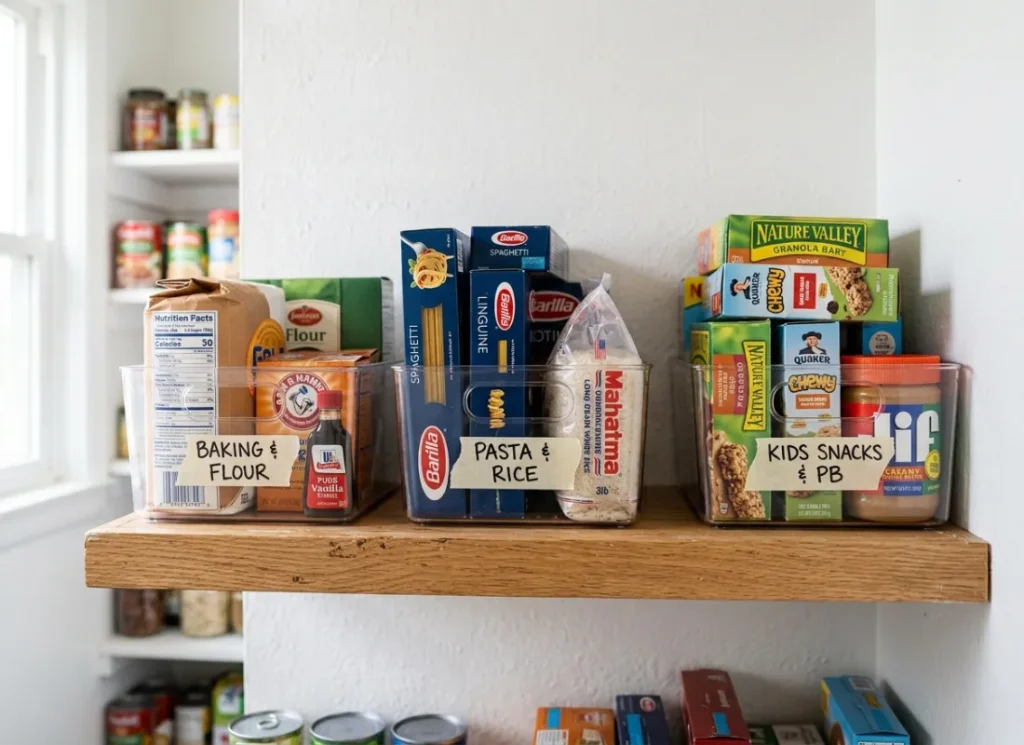
6. Bins for Grouping, Not Just Storing
This one changed how I think about organization in general. The problem with most messy kitchens is not that there is no space. It’s that similar things are not kept together.
Take a medium plastic bin and make it a “baking bin.” Flour, baking soda, vanilla extract, your measuring spoons. Put them all together. When you bake, you pull out one bin. When you’re done, everything goes back in one bin.
Do the same for “lunchbox supplies,” “snack bags,” “pasta and rice.” You’re not organizing individual items. You’re organizing categories.
The bins do not need to be pretty. They need to have handles and be stackable. That’s it.
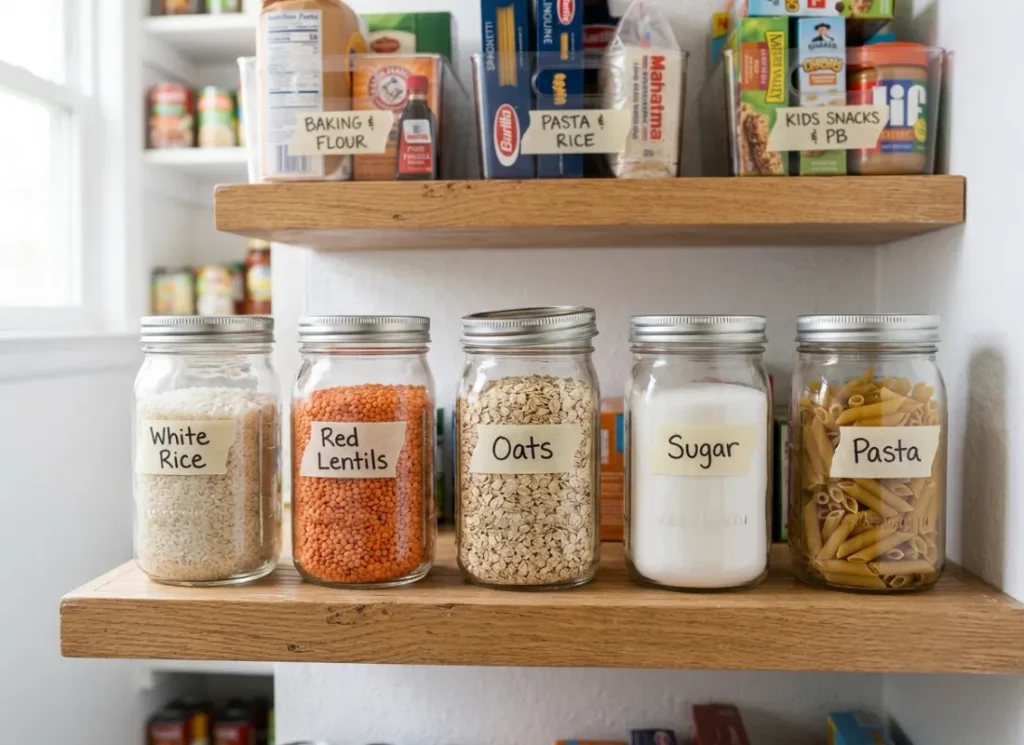
7. Mason Jars for Dry Goods (And They Look Great Too)
I know mason jars are a bit of a cliche in the organization world. But there is a reason people keep recommending them: they work.
For dry goods like rice, lentils, oats, pasta, sugar, dried beans, a set of mason jars is one of the most practical switches you can make. You can see exactly how much you have left. They stack better than bags. They keep food fresher. And pests cannot get in.
Pick up a multi-pack from the dollar store or a discount shop. You do not need them to be fancy. Fill them, write the name on the lid with a marker, and line them up on a shelf or in a basket.
The key is actually transferring things into the jars the same day you buy groceries. It takes ten minutes and makes the rest of the week so much easier.
8. A Basket on Every Shelf Changes How a Pantry Feels
Loose items in a pantry are the fastest way to create visual chaos. Even if everything is technically organized, if things are scattered, it looks and feels messy.
One basket per shelf, used for the miscellaneous overflow of that shelf’s category, fixes this immediately. It could be a wire basket, a plastic one, or even a fabric storage box from a discount bin. The shape doesn’t matter. The function does.
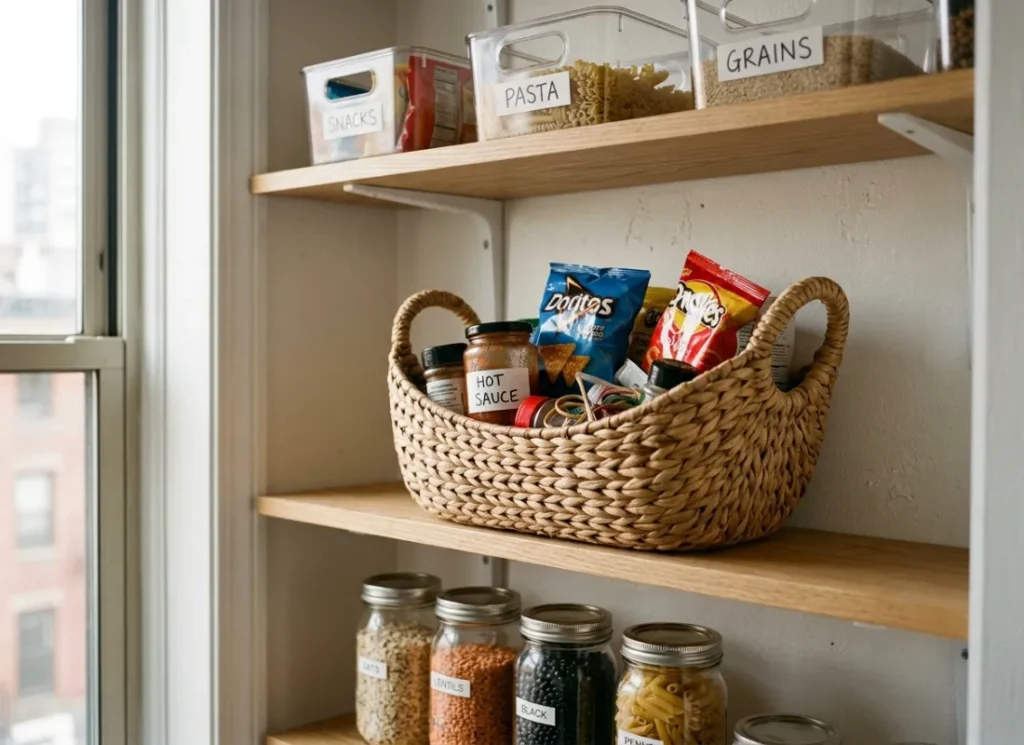
Think of it this way: the basket is where things live before they find their permanent spot. It is also where things go that do not have a permanent spot yet. It’s the friendly catch-all that keeps a space looking organized even when it isn’t perfectly sorted.
9. Use Small Bins Inside the Fridge Too
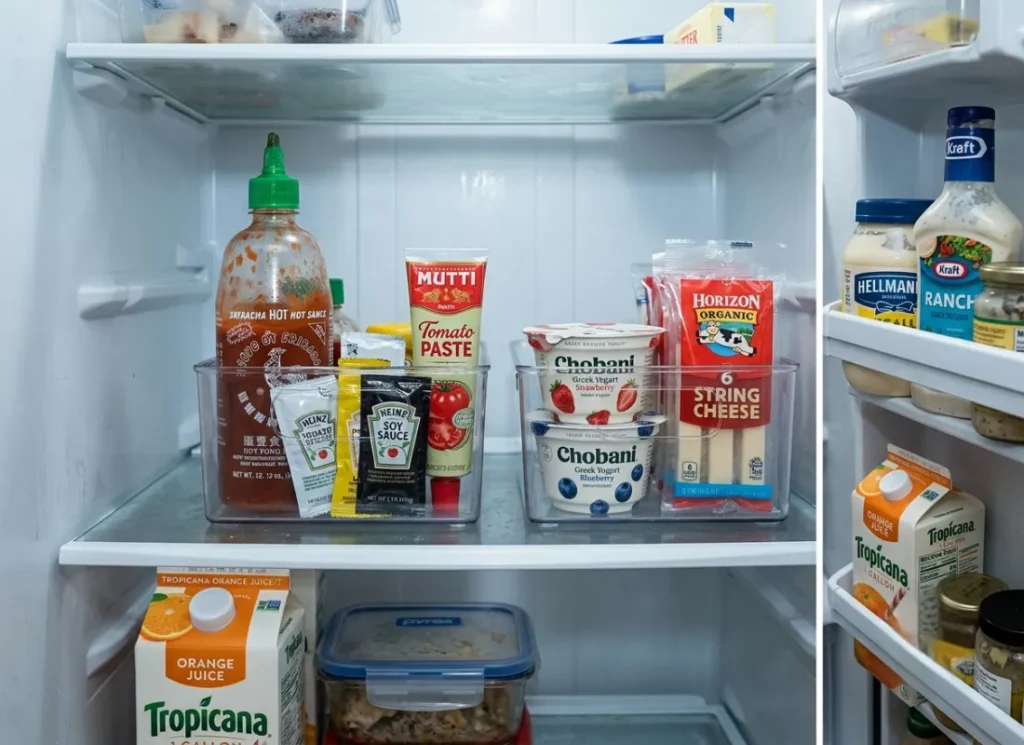
Most people stop their dollar store organizing at the pantry and forget that the fridge is just as chaotic. Small clear plastic bins, the same kind you used for your drawers, work perfectly inside a fridge shelf.
One bin for sauces and condiment packets. One for leftovers in small containers. One for kids’ yogurts and snacks. You can slide the whole bin out to find something instead of moving every single item.
This also makes cleaning the fridge infinitely easier because you lift one bin, wipe the shelf, and put it back.
10. Command Hooks for Lids and Cutting Boards
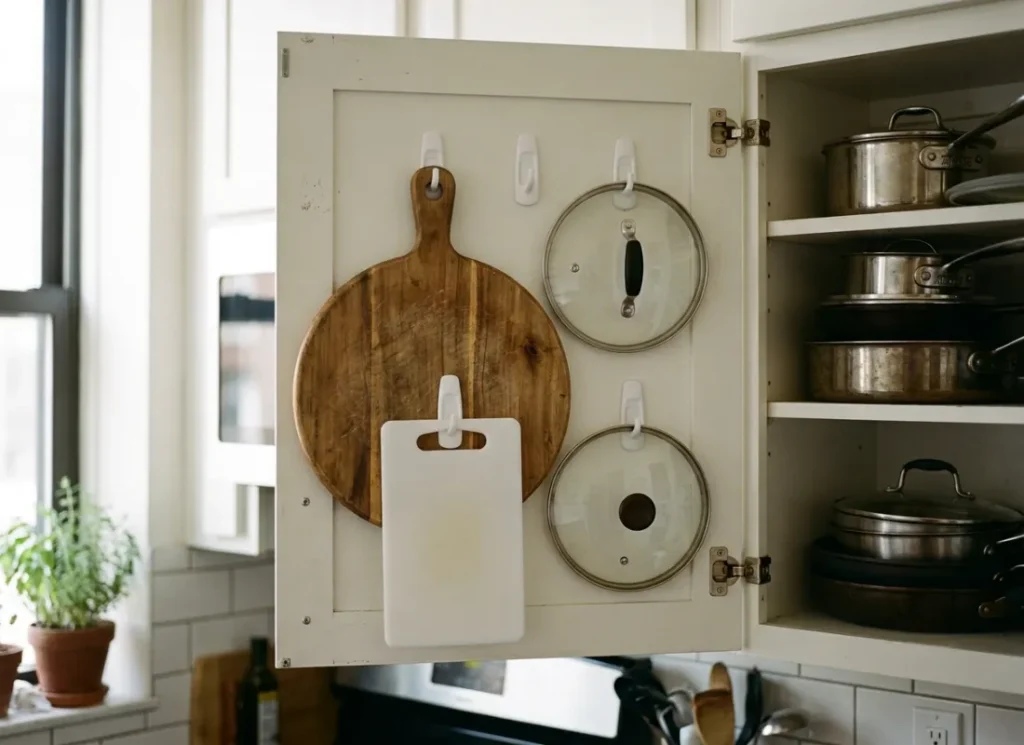
Pot lids and cutting boards take up an unreasonable amount of space in a small kitchen. They don’t stack well, they slide around, and they always seem to be in the way of whatever you actually need.
Command hooks from the dollar store, stuck to the inside of a cabinet door, can hold cutting boards vertically. A few in a row can also hold pot lids by their handles. This moves two of the most annoying categories completely off your shelves and onto unused door space.
The key is to use the right size hook for the weight and to press them firmly and let them set for a full hour before loading them. This makes a real difference in how long they hold.
A Quick Dollar Store Shopping List Before You Go
Before your next trip to Dollar Tree, Dollar General, Poundland, or any budget store near you, here is what’s actually worth picking up for your kitchen and pantry:
Small matching jar sets for spices and dry goods. Rectangular plastic bins in two sizes, one for drawers, one for shelves. A lazy susan, even the simplest plastic one works. A tension rod for under-sink storage. Baskets with handles, one per pantry shelf. Mason jars in whatever size fits your shelf. Command hooks, at least a pack of the medium ones. A shoe rack if your pantry floor is empty.
You do not need to buy everything at once. Start with the area that bothers you most, spend five to ten dollars, and see what changes. Then go back for the next area.
The Honest Truth About Dollar Store Organizing
These items are not going to last forever. A cheap plastic bin might crack after a year or two. A wire basket might rust. That’s okay. You spent a dollar. You got two years of organized living out of it.
The goal was never to buy forever items. The goal was to get your space under control without spending money you don’t have. And for that, the dollar store is genuinely one of the best tools available. If you want to spend literally nothing at all, these 9 free storage ideas use cardboard boxes you already have.
The hacks in this post are not the prettiest solutions you’ll ever see. But they’re the ones that actually work in a real kitchen with real people and real messes. And honestly, that’s all that matters.
FAQ
Is it worth buying organization items from the dollar store?
Yes, for most basic organizing needs, dollar store items do the job just as well as expensive alternatives. Bins, jars, baskets, and hooks do not need to be premium quality to be functional.
What is the best dollar store item for kitchen organization?
A lazy susan and small plastic bins are the most versatile. The lazy susan fixes hard-to-reach corner storage and the bins work in drawers, fridges, pantries, and cabinets.
How do I keep my pantry organized after I set it up?
The key is having a home for every category and actually returning things to that home after use. Labeling your bins and jars makes it much easier to maintain because everyone in the household knows exactly where things go.
Do dollar store mason jars work as well as brand name ones?
For dry goods storage, yes. They seal well enough to keep food fresh and pests out. If you’re doing pressure canning, you’ll want proper canning jars, but for everyday pantry storage they’re perfectly fine.
How many bins do I need to organize a small kitchen?
Start with one bin per cabinet or shelf zone. For most small kitchens, eight to ten small and medium bins covers drawers, pantry shelves, under-sink, and the fridge. That’s under fifteen dollars total.
Can I use these hacks if I rent my home?
Absolutely. Everything in this list is either freestanding, goes inside existing storage, or uses removable Command strips. Nothing requires drilling or permanent changes.
RELATED ARTICLES
10 Storage Solutions Using Items You Already Own
How to Organize a Studio Apartment With No Closet Space
KonMari Method for Beginners: How to Actually Do It
Bathroom Under-Sink Storage: 8 Ideas for Small Spaces





Trackbacks/Pingbacks