
There is a very specific kind of frustration that only happens in the kitchen.
You need the sugar. You open the first cabinet and find plates and a pot lid. You open the second one: coffee, some spice jars, a measuring cup you forgot you owned. Third cabinet: more spices, a mixing bowl, and maybe the sugar? No. Fourth cabinet. Finally.
That was my kitchen for a long time.
It was not dirty. It was not falling apart. It was just chaotic in that quiet, exhausting way where everything has a place but nobody actually knows where that place is. The shelves had random things scattered across them with no system at all. Each cabinet was a mix of whatever had landed there: spices next to pots, coffee next to other spices, utensils tucked in with pasta boxes. Open one, find three completely unrelated things.
The person who cooks in our house most often had a rough mental map of where things were. But even that fell apart half the time. And for anyone else stepping into the kitchen to help? They were on their own, opening every door and hoping for the best.
Last month, I finally had enough. I cleared my calendar for one full weekend, took everything out, and sorted it all out from scratch. It took less effort than I expected, and the results have genuinely changed how I feel about being in my kitchen every single day.
Here is exactly what I did.
Why I Finally Did It
I had been putting this off for a long time. A full kitchen reorganization sounds like a big project, and it was easy to keep pushing it back.
What finally pushed me was one ordinary morning. I was making coffee before work, already running a few minutes late. I opened three different cabinets before I found the mugs. The coffee was in a fourth spot. The sugar required its own search entirely. By the time I actually sat down with my cup, I was already irritated and the day had barely started.
That evening I made myself a deal: this weekend, the kitchen gets sorted. For real this time.
Before I Touched Anything: My Two-Part Plan
I did not want to just move the clutter around and end up with the same problem in a different arrangement. So before pulling anything out, I decided two things:
First, I would use a zone system. The concept is simple. Your kitchen should have dedicated areas based on how you actually use it. A cooking zone, a coffee and tea zone, a pantry zone, and so on. Everything within a zone lives together. No more spices scattered across four different cabinets. It is the same logic behind grocery-store-inspired organization: group things the way you actually use them.
Second, I kept my supply list short. I picked up:
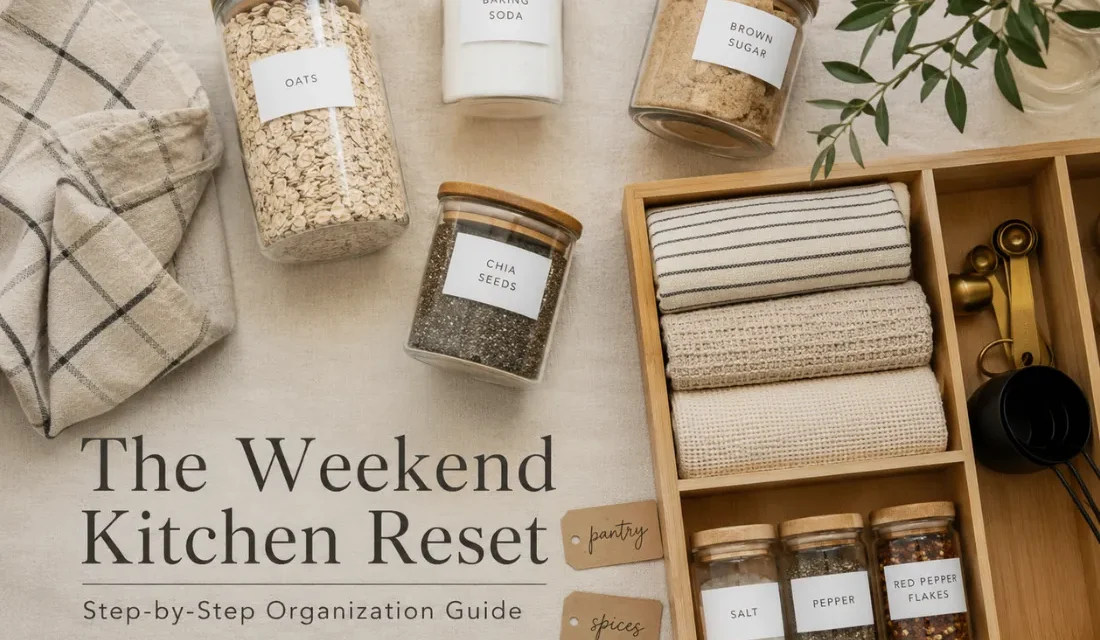
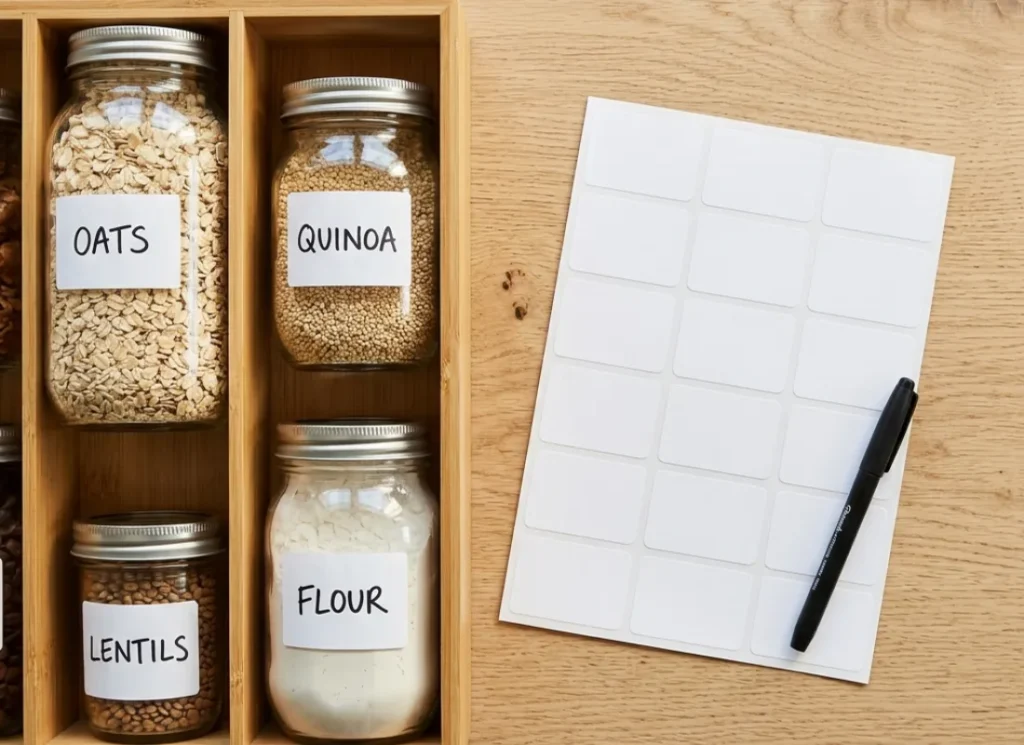
- A set of glass jars with labels for pantry staples
- A drawer divider for the utensil drawer
- Simple paper tags and a marker for the cabinet doors
That was it. The goal was a kitchen that worked, not a magazine spread.
Day One, Morning: Empty Everything Out
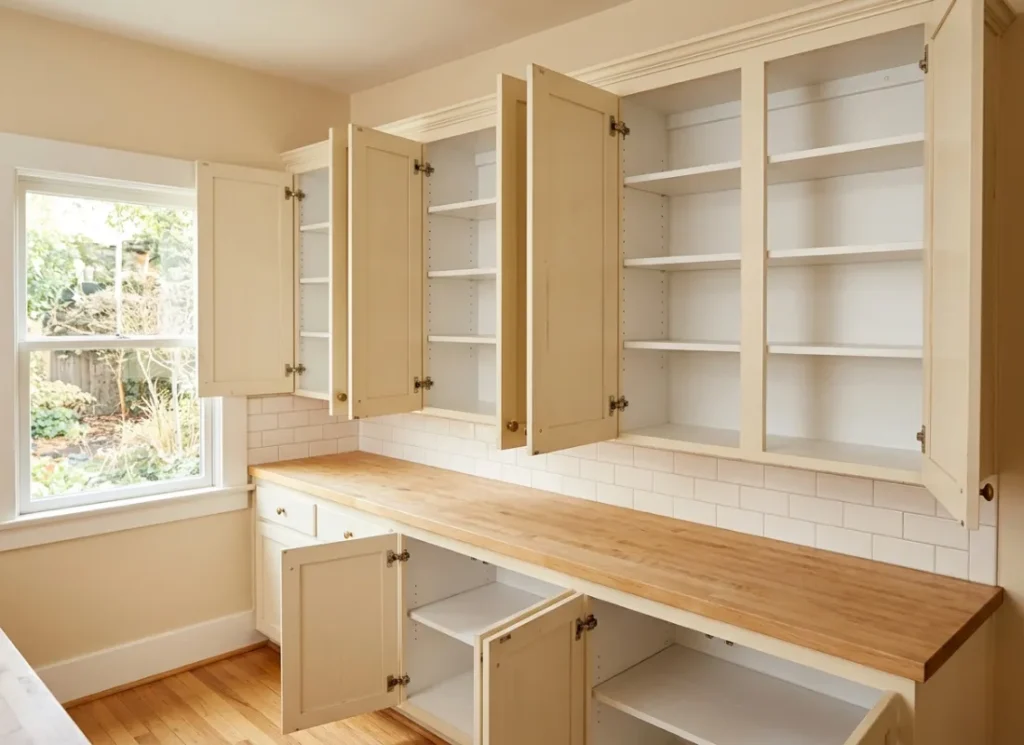
Saturday morning, I pulled absolutely everything out of every cabinet and off every shelf.
Every single thing.
I know this sounds counterproductive. For about twenty minutes, my kitchen looked dramatically worse than when I started. But this step is not optional. You cannot organize on top of chaos. You have to see what you actually own before you can decide where things should live.
Once everything was spread across the counter and kitchen table, I did a full clean. Wiped every shelf, every cabinet interior, every corner. Cleaned the counters, the stovetop, the edges and backs of shelves that usually get ignored. Starting with a completely clean, empty kitchen made putting things back feel intentional instead of just rearranging the mess.
Day One, Afternoon: The Sort
With everything out in the open, I sorted into categories. Not by size or frequency of use at first, just by what things actually are:
- Pots, pans, and lids
- Plates, bowls, and glasses
- Utensils and cooking tools
- Spices
- Pantry staples (rice, pasta, lentils, sugar, flour)
- Coffee and tea supplies
- Snacks and extras
This part was genuinely eye-opening. I found I had more than one of several things I had repurchased because I could not find the original. I found spices I completely forgot we had. I found things tucked in the back of shelves that were well past their expiration date.
I did a small but meaningful declutter while sorting. Expired items went straight in the bin. Duplicate things we did not need went in a donation pile. If you want help with the letting-go part of this process, the KonMari method is a great framework to follow.
Day Two: Putting It All Back With a System
Sunday was the satisfying part.
I had sketched a rough plan the night before deciding which cabinet would hold what. The main rule: each zone had to make sense based on how I actually use the kitchen, not just what fits where.
Here is the system I landed on:
Cabinet near the stove: All pots, pans, and lids. Everything related to cooking, in one spot.
Cabinet near the sink: Plates, bowls, and glasses. Everything needed to set a table, together.
Coffee and tea cabinet: Coffee, tea bags, mugs, and everything that goes with them. A self-contained station so making a cup of anything requires exactly one cabinet.
Spice cabinet: Every single spice. Only spices. Not one spice in this cabinet and two in another. All of them, here.
Pantry cabinet: Rice, pasta, sugar, flour, lentils, oats, in the labeled jars.
Misc cabinet: Snacks, baking supplies, extras.
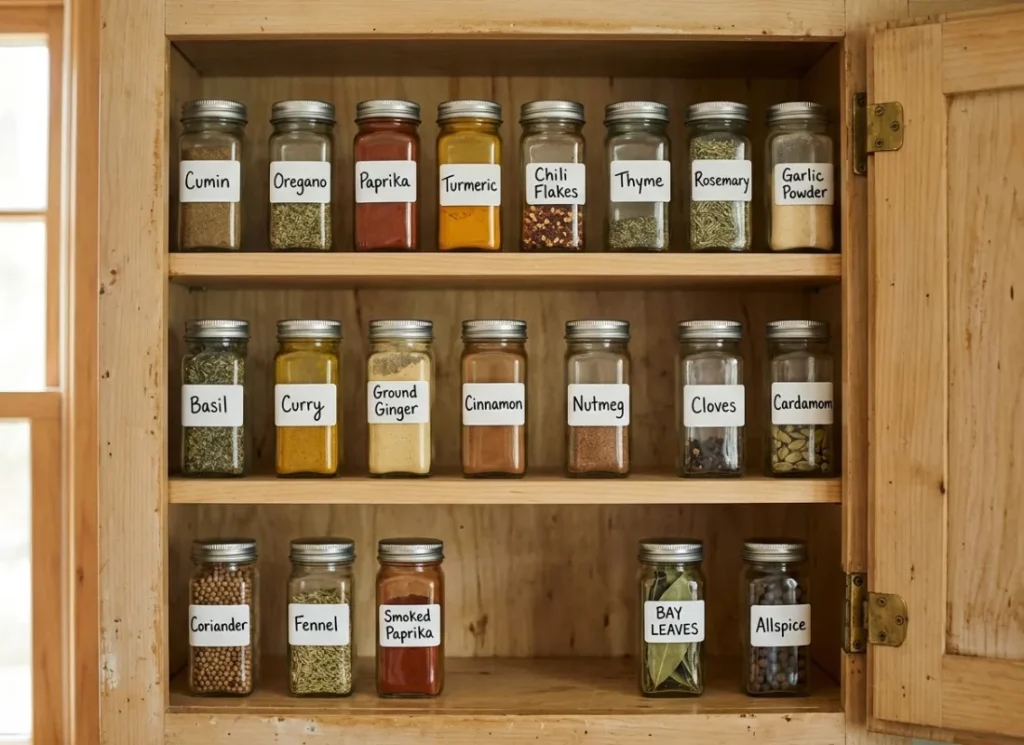
Once each category had a real home, putting things back took about two hours. And it felt genuinely great.
The Two Products That Made the Biggest Difference
I kept the shopping minimal, but these two were worth every penny:
Labeled Glass Jars
I transferred all the loose pantry staples into matching glass jars: rice, pasta, sugar, flour, lentils, oats, a few others. This solved several problems at once.
First, the cabinet looks calm instead of chaotic. No more half-open bags leaning against each other. Second, you can see at a glance when something is running low. Third, the labels mean anyone in the house can find what they need without asking the one person who has memorized the cabinet map.
I went with simple clear glass jars from Amazon, nothing fancy. Plain white label stickers with handwritten names on each one. The whole set cost around $25 to $30 and covered most of my pantry.
Drawer Dividers
The utensil drawer had always been the worst part of the kitchen. Wooden spoons mixed with spatulas mixed with peelers mixed with random things that had no business being there.
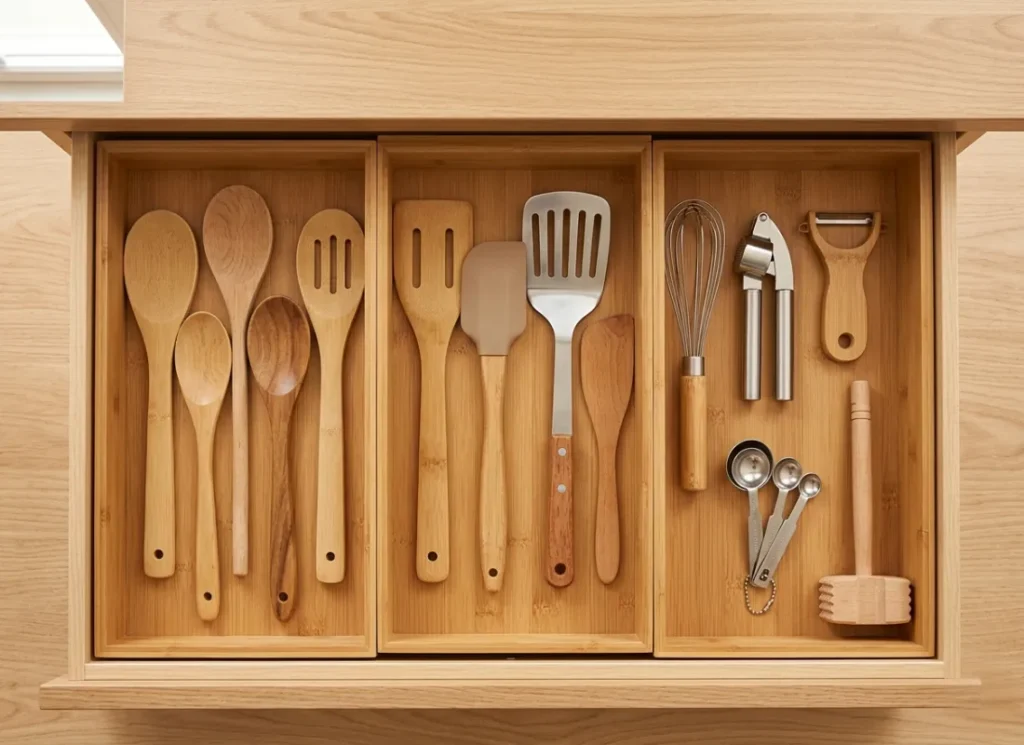
I added an adjustable bamboo drawer divider, and it separated everything cleanly into sections: spoons together, spatulas together, small tools together. It sounds like such a small thing, but opening that drawer now and immediately grabbing what you need without digging around is a genuinely different experience.
The Cabinet Labels: The Idea I Almost Did Not Do
I was not sure about this one. Putting labels on the outside of cabinet doors felt a little too much, a little over-organized. But I did it anyway with simple handwritten paper tags, and it has become one of my favorite parts of the whole project.
Now anyone who walks into the kitchen can find what they need without opening every door. My partner stopped asking me where things are. Guests can help themselves. Even I move faster in the kitchen because there is zero mental searching involved.
If you want it to look more polished, there are printed label options, chalkboard stickers, or small acrylic label frames that attach to the front of the door. I went handwritten and it looks fine. Very real home, not a furniture catalog.
What the Kitchen Actually Feels Like Now
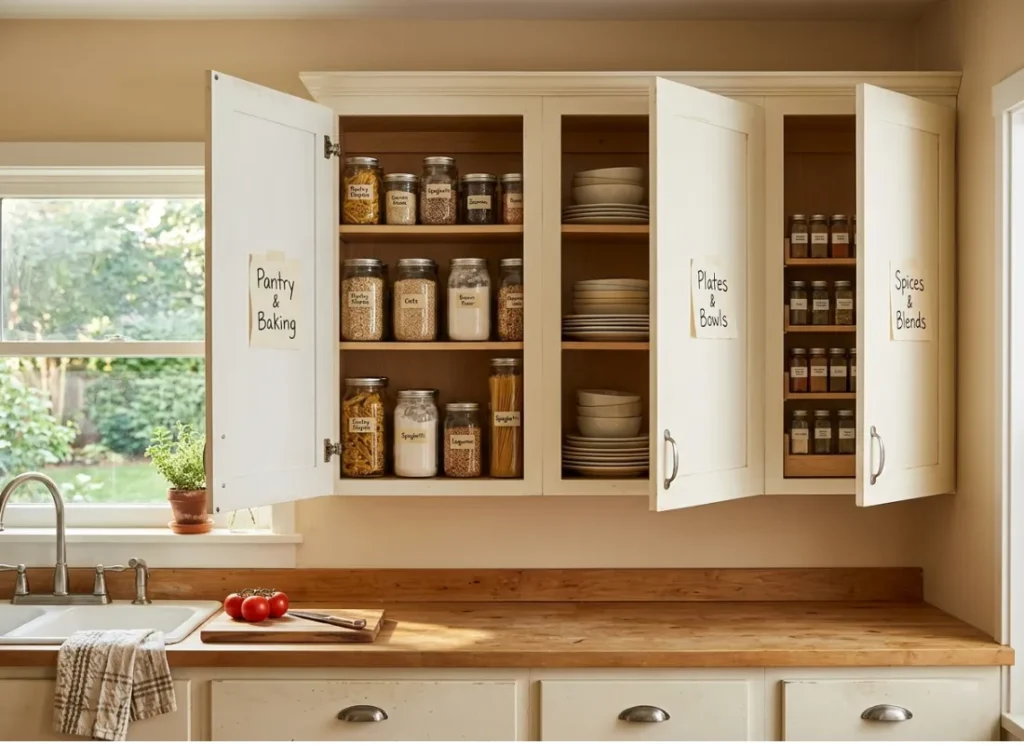
Two weeks later, the kitchen is still organized. That does not always happen with these projects, but I think the system has held up because it makes sense. Each thing has one logical home, and putting it away correctly is easier than not doing it.
The biggest change is the mental load, or rather the lack of it. I do not think about where things are anymore. I just go to the right cabinet and grab what I need. It sounds small, but across every meal, every cup of coffee, every time you are in a hurry, it adds up to a lot of recovered peace.
I also know exactly what is in my pantry now. No mystery bags at the back of shelves. No buying things I already have. That alone has probably started saving money.
If there is one thing I have taken away from this project, it is that I should have done it much sooner. Not because it was hard, but because it was not hard at all. And the kitchen has felt like a genuinely nicer place to be every single day since.
If you are holding off for the same reasons I was, block off a weekend. Start by taking everything out. The rest follows naturally.
6 Things I Would Tell Myself Before Starting
- Do the full empty-out. Do not skip it. You cannot organize around clutter. Take everything out, even if the counter chaos feels overwhelming for a few hours.
- Clean before putting anything back. It is extra work, but it makes the whole project feel worthwhile.
- Label your cabinets, even if it feels unnecessary. Especially if more than one person uses the kitchen.
- You do not need matching containers for every surface. A logical zone system does most of the work on its own.
- Sort first, shop second. Only buy organizing products after you know exactly what you have and what spaces you are working with.
- One weekend is genuinely enough. It really is.
FAQ
How long does it actually take to organize a full kitchen?
For most home kitchens, one weekend is plenty. The first day goes to emptying everything out, cleaning, and sorting by category. The second day is for putting things back with a proper zone system. If your kitchen is on the smaller side, you might finish within a single long day.
Do I need to buy a lot of products to get organized?
No. The two things that made the biggest difference for me were labeled glass jars (around $25 to $30 for a set) and a drawer divider (around $15 to $20). Cabinet labels I made myself with paper and a marker. You do not need to buy a full matching organization kit to get results.
What is a kitchen zone system?
A zone system means grouping items by how you use them rather than by size or whatever fits where. Cooking tools near the stove, dishes near the sink, coffee and tea supplies together, all spices in one cabinet, pantry staples together. Each zone has one dedicated home.
How do I stop the kitchen from going back to chaos?
The key is making sure the “put it away correctly” option is actually the easy option. When your system makes logical sense, things naturally go back to the right place. Cabinet labels help everyone in the household maintain the system, not just the person who set it up.
What do I do with the things I find but do not want to keep?
Expired pantry items go straight in the bin. Duplicate gadgets and items in good condition can be donated. Broken or worn-out items, recycle or toss. The reorganization is a perfect chance to declutter. The KonMari method is a helpful guide for deciding what stays and what goes [internal link].
Do I need matching jars and containers for everything?
Matching containers look tidy, but they are not what makes a system work. I used matching jars for the pantry because clear uniform containers genuinely help at a glance. The rest of the cabinets use whatever was already there. Function first, aesthetics second.





Trackbacks/Pingbacks