
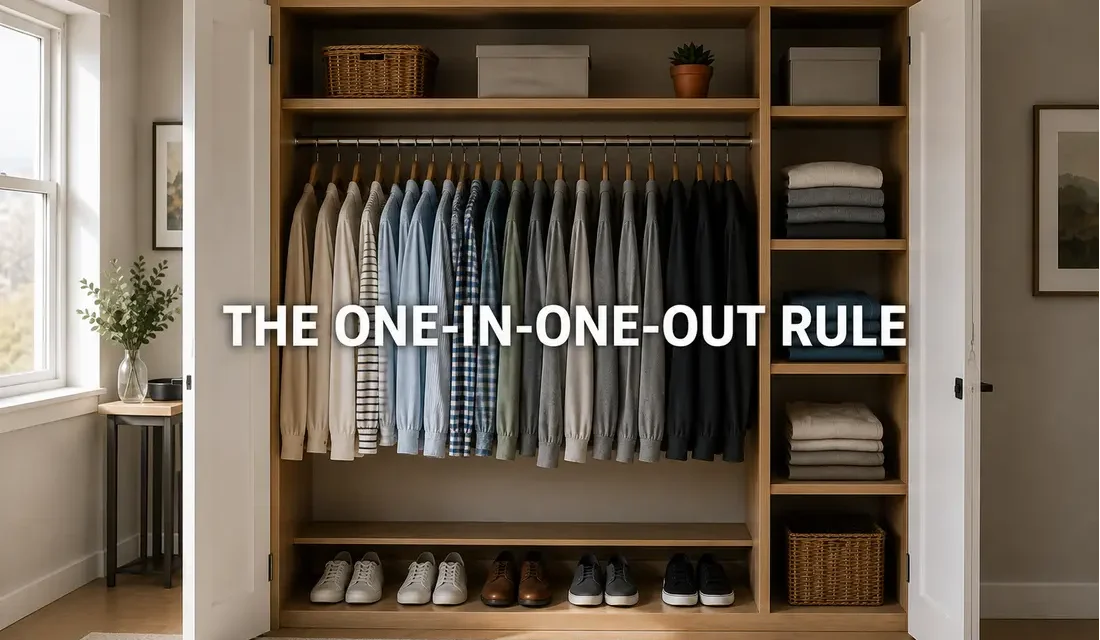
The one-in-one-out rule means that for every new item you bring home, one existing item leaves, ideally something similar, a shirt for a shirt, a mug for a mug. It works best as a maintenance habit for a space that is already organized, not as a fix for a home that is already overflowing.
I have tried this more than once and never kept it going for long. I would stay consistent for a week or two, then my kids would bring home a new toy or my spouse would pick something up, and nobody else was tracking an old item to remove. I ended up being the only one holding up my end while the shared spaces kept piling up anyway.
What Is the One-In-One-Out Rule?
It is a maintenance habit, not a decluttering method. Every new item is matched by one leaving, through donation, selling, or repurposing. Professional organizer Lauren Saltman explains that the rule works by creating awareness and balance, preventing the slow accumulation that happens one purchase at a time. You are not aiming to own less over time, you are aiming to stop owning more.
Why Does It Stop Working After a While?
It breaks down when people expect it to fix a mess it was never built to fix. One organizing resource notes that the rule prevents new clutter from arriving, it does not reduce clutter that already exists. If your closet is already overflowing, swapping shirt for shirt will not shrink the pile, it will just stop it from growing.
That mismatch between expectation and reality is, in my experience, why it quietly falls apart:
- You expect it to fix a mess that already exists
- The mess does not shrink because that was never the rule’s job
- You get discouraged and stop bothering within a few weeks
1. Start With a Space You Fully Control
Apply the rule to your own closet, desk, or dresser before trying to get the whole household on board. This is what finally worked for me. Once I limited it to my own room, closet, and computer desk, it stuck, because I was not depending on anyone else.
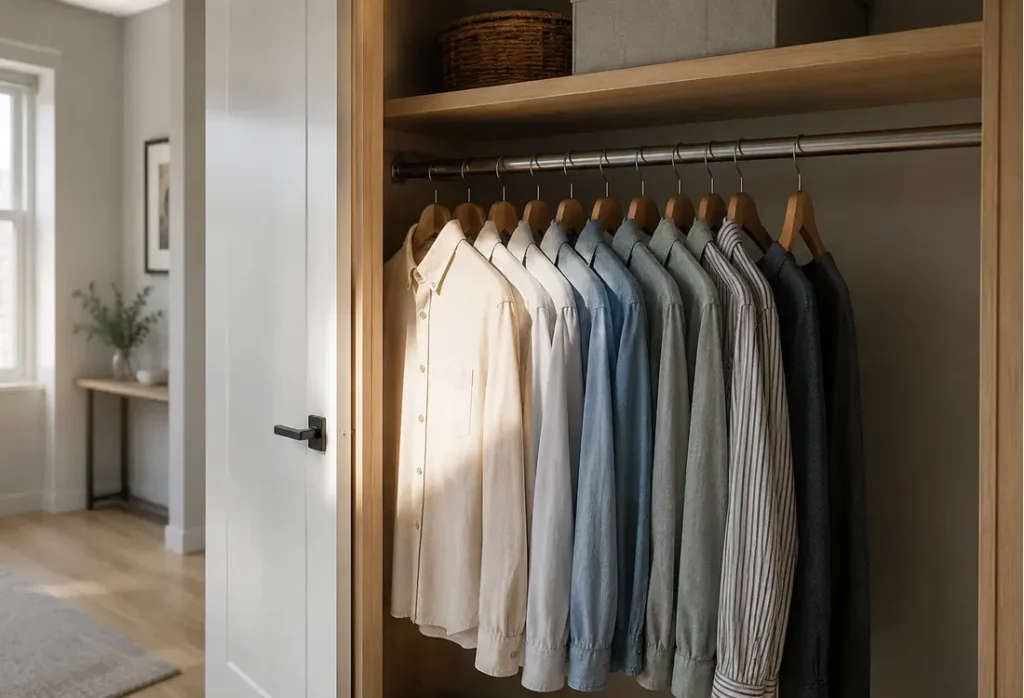
2. Pick the Exit Point Before You Buy
Decide where the outgoing item is going before the replacement comes home. A few options that work well:
- A donation bag kept by the door, ready to go at any time
- A resale app listing started the same day an item is set aside
- A specific friend or family member who has already said they want it
Without a clear exit, the old item just moves to a different pile instead of actually leaving.

3. Work One Category at a Time
Choose a single category first, then expand once it feels automatic:
- Clothing (closet and dresser)
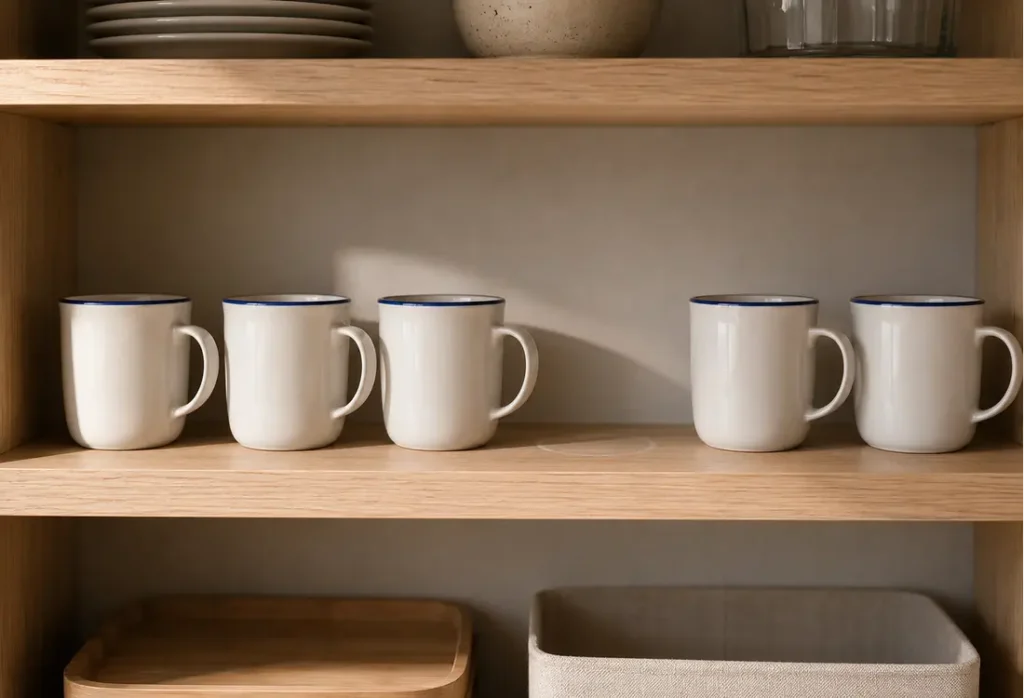
- Kitchen items (mugs, utensils, gadgets)
- Books or media
Running the rule across everything at once makes it easy to lose track of which item was supposed to leave for which new arrival.
4. Make the Rule Visible for Family Members
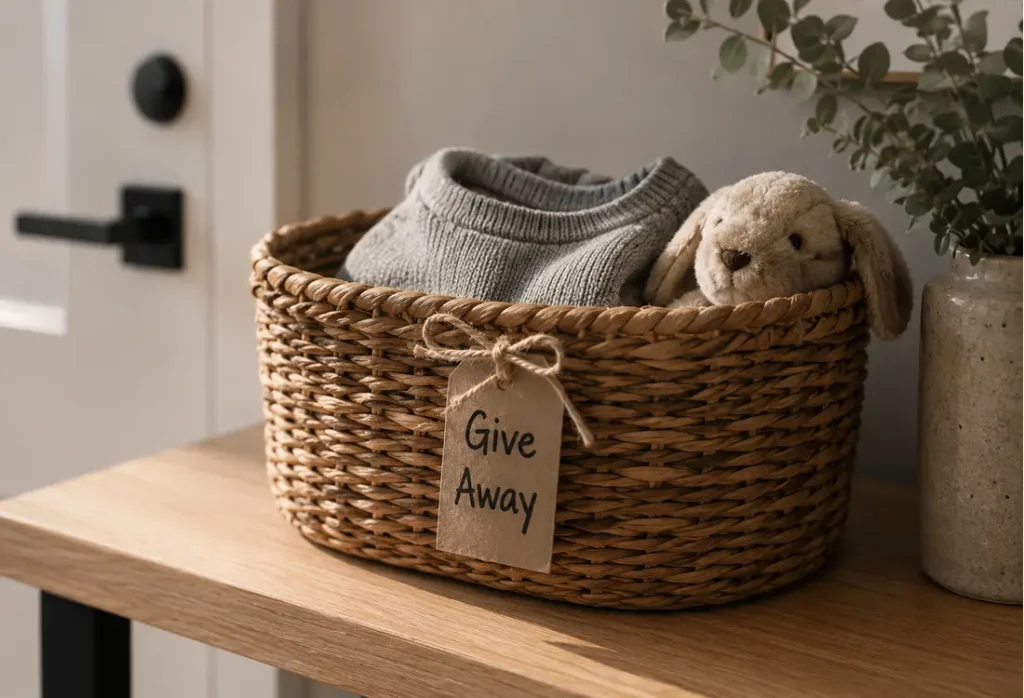
Explaining the concept once rarely holds up, especially with kids. When I explained it to my family, everyone followed it for a day or two and quietly went back to old habits. A labeled bin by the door worked far better than a rule nobody could see.
5. Let Sentimental Items Sit Outside the Rule
Gifts and sentimental items rarely fit a strict swap system, and forcing them usually stalls the whole habit. It is more realistic to exclude them entirely and apply the rule only to everyday, replaceable categories.
6. Give It Thirty Days Before You Judge It
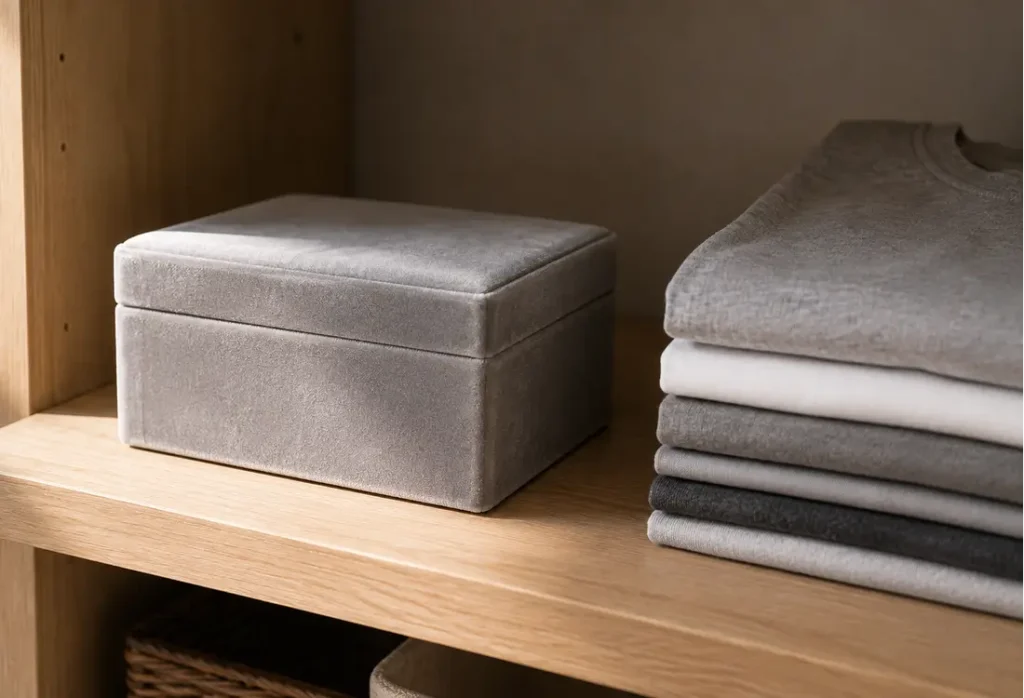
A week is not enough time to tell if the habit has taken hold. Most of the breakdown happens after the first burst of motivation fades, not in the first few days. Watching what happens the first time you forget tells you more than the first week ever will.
7. Plan for the Rule to Break
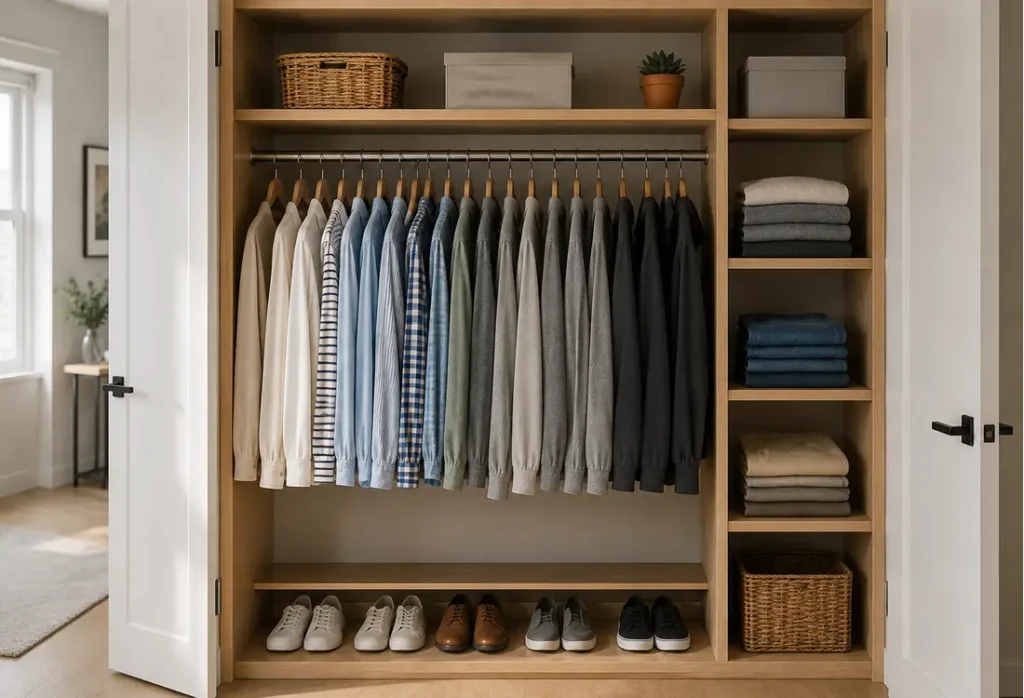
Assume it will slip at some point, a gift, a busy week, a forgotten swap, and decide your reset in advance instead of abandoning the whole system. For me, that reset is usually a short weekend pass through just my own closet and desk, nothing more elaborate than that.
8. Know When You Need a Real Declutter First
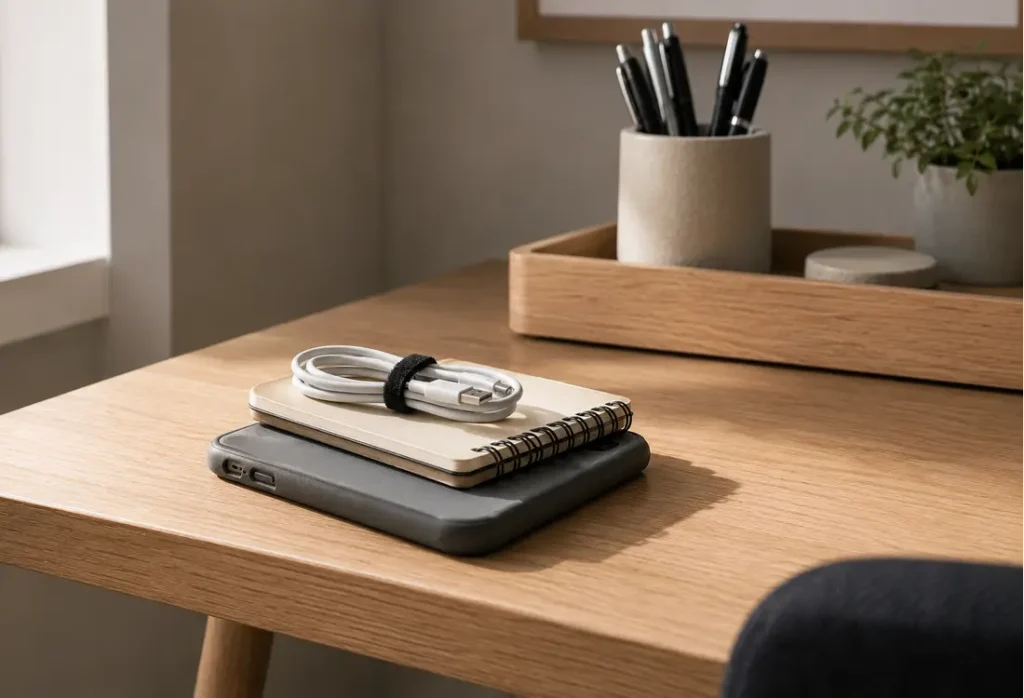
If a space is already overflowing, a one-time decluttering reset comes before this rule, not instead of it. The rule only takes over once that baseline is actually in place.
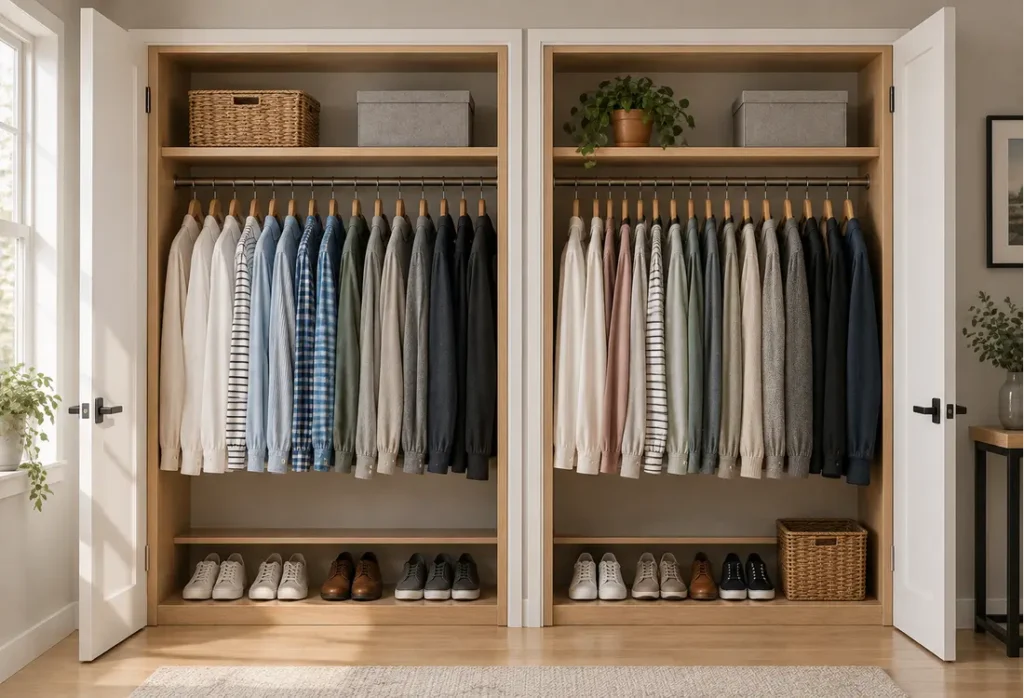
This never worked for me as a whole-house system, and it might not for you either right away. What worked was scaling it down to spaces I actually controlled, giving it real time, and accepting some categories were never going to fit.
Frequently Asked Questions
Does the one-in-one-out rule actually reduce clutter? Not on its own. It prevents new clutter from building up in an already-organized space, but it does not shrink clutter that already exists.
How do you get kids to follow the rule? Tie it to something visible, like a labeled bin near the door, rather than explaining it once. Kids follow what they see the adults doing more than what they are told.
What items should be excluded from the rule? Gifts and sentimental items are the most common exceptions, since forcing them into a strict swap usually breaks the habit. Stick to everyday, replaceable categories.
How long before it becomes a real habit? Most of the breakdown happens in the first month, usually the first time something disrupts the routine. Give it thirty days, including one reset after a slip.
Can one person make it work if the rest of the household does not? Yes. Applying it to a space you fully control still keeps that space clutter-free, even if shared areas are not consistent.




Trackbacks/Pingbacks